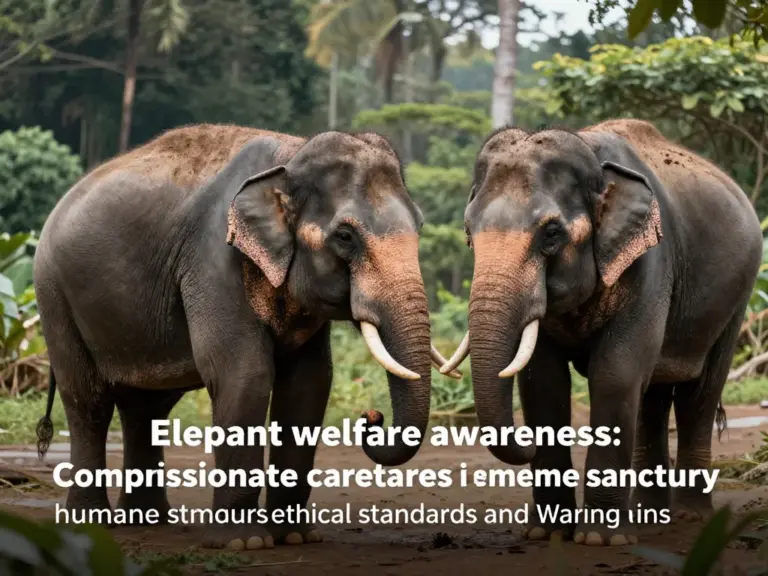
Why Elephant Welfare Matters: Understanding Ethical Standards and Red Flags
Elephant welfare has become a central pillar of responsible travel in Southeast Asia. As Thailand’s national symbol, the Asian elephant holds immense cultural, historical, and ecological significance. However, the transition from traditional labor in the logging industry to the modern tourism sector has created complex challenges for these majestic creatures. Understanding the nuances of elephant welfare is not just about being a kind traveler; it is about ensuring the survival and dignity of a species that is currently classified as endangered.
The Importance of Elephant Welfare in Thailand
For many travelers, a trip to Thailand is incomplete without seeing an elephant. But why does elephant welfare matter so much? From a biological perspective, elephants are highly intelligent, social animals with complex emotional lives. In captivity, they require vast amounts of space, a diverse diet, and the freedom to interact with their own kind. When these needs are neglected, elephants suffer from severe psychological trauma and physical ailments. By prioritizing welfare, we support a shift toward “observation-only” models that respect the animal’s natural behavior rather than exploiting them for entertainment.
Understanding Ethical Standards for Sanctuaries
A true sanctuary is a place of refuge where the needs of the animals come before the desires of the visitors. Ethical standards are set by international organizations like World Animal Protection and the Global Federation of Animal Sanctuaries (GFAS). These standards focus on the “Five Freedoms”: freedom from hunger/thirst, discomfort, pain/injury, fear/distress, and the freedom to express natural behavior. In a high-quality facility, you will see elephants foraging, bathing themselves without human interference, and socializing in natural herds.
| Feature | Ethical Standard |
|---|---|
| Interaction | Observation from a distance; no forced contact. |
| Environment | Large, naturalistic spaces with trees and mud pits. |
| Social Life | Elephants are allowed to form their own social groups. |
| Management | Positive reinforcement; no use of bullhooks or chains. |
Red Flags: How to Spot Unethical Venues
Identifying unethical practices can be difficult because many venues use “greenwashed” marketing terms like “sanctuary,” “rescue center,” or “orphanage” without actually changing their practices. Here are the critical red flags to look for:
Riding: Any venue that offers elephant rides, whether with a chair (howdah) or bareback, is inherently unethical. An elephant’s spine is not designed to carry the weight of humans.
Performances: If elephants are performing tricks, painting, or playing football, they have been trained through “the crush” (Phajaan)—a process involving physical and psychological breaking.
Bullhooks and Chains: The visible use of sharp metal hooks or heavy chains indicates a management style based on fear and restriction.
Bathing with Tourists: While it looks cute, forced bathing sessions multiple times a day is stressful for elephants and can contaminate the water with bacteria like Leptospirosis.
The Future of Elephant Tourism
The future of elephant welfare depends on the choices made by tourists today. As demand for riding and shows decreases, more camp owners are incentivized to transition to observation-based models. Organizations like the Southern Thailand Elephant Foundation (STEF) and Save Elephant Foundation are working tirelessly to provide veterinary care and education to local communities. By choosing to visit only those facilities that prioritize the animal’s natural lifestyle, you become part of the solution, ensuring that future generations can see these incredible animals living in peace.