Conservation Impact: How Mangrove Planting Helps Krabi’s Ecosystem — benefits, community involvement, and how tours support restoration
- Conservation Impact: How Mangrove Planting Helps Krabi’s Ecosystem — benefits, community involvement, and how tours support restoration
Krabi is globally renowned for its limestone karsts and turquoise waters, but its true ecological backbone lies within its dense mangrove forests. These ‘forests of the sea’ act as a vital transition zone between land and ocean. In recent years, the realization that mangrove planting helps Krabi’s ecosystem has sparked a movement involving locals, NGOs, and travelers alike. This article explores the profound benefits of these coastal guardians and how collective action is securing Krabi’s natural future.
The Vital Role of Mangroves in Krabi’s Biodiversity
Mangroves are far more than just trees in the mud; they are biological powerhouses. In Krabi, species like the Rhizophora mucronata provide a complex root system that serves as a nursery for juvenile fish, crabs, and shrimp. This biodiversity is crucial for maintaining the health of the Andaman Sea. Without these nurseries, the local fishing industry and the coral reefs further offshore would suffer significantly.
How Mangrove Planting Helps Krabi’s Ecosystem: Key Benefits
The act of restoration provides immediate and long-term advantages for the region. When we look at how mangrove planting helps Krabi’s ecosystem, three main pillars emerge: coastal protection, water filtration, and carbon sequestration. The intricate root networks stabilize the shoreline, preventing erosion from the heavy monsoon rains and protecting inland villages from storm surges and tsunamis. Furthermore, mangroves act as a natural filter, trapping sediments and pollutants before they reach the fragile coral reefs.
Community Involvement: The Heart of Restoration
Successful conservation is never a solo effort. In Krabi, local communities are the primary stewards of the mangroves. Villages like Ban Bor Thor and Klong Thalane have established community-based management groups. These groups monitor the health of the forests, run nurseries for saplings, and educate the younger generation on the importance of conservation. This involvement ensures that restoration efforts are sustainable and that the local people directly benefit from the ecosystem services provided by the mangroves.
| Restoration Activity | Impact on Krabi |
|---|---|
| Sapling Cultivation | Ensures genetic diversity of local flora. |
| Community Guarding | Prevents illegal logging and encroachment. |
| Education Workshops | Builds long-term environmental awareness. |
How Eco-Tours Support Restoration Efforts
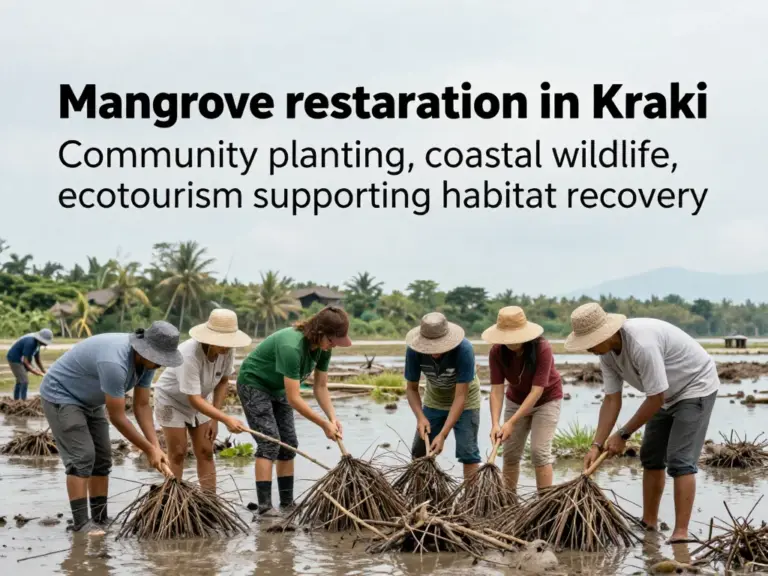
Tourism in Krabi is shifting toward a more responsible model. Many kayak and boat tours now incorporate ‘voluntourism’ elements. Instead of just paddling through the tunnels of green, visitors can participate in planting saplings in designated restoration zones. The revenue generated from these tours often goes directly back into community funds that pay for conservation equipment and mangrove seedling care. This creates a circular economy where tourism directly funds the protection of the very environment that attracts visitors.
Conclusion
The health of Krabi’s coastline is inextricably linked to its mangroves. By understanding how mangrove planting helps Krabi’s ecosystem, we can better appreciate the balance between tourism and nature. Through community dedication and the support of eco-conscious travelers, Krabi’s green walls will continue to protect its shores and sustain its people for generations to come.
คำถามที่พบบ่อย (FAQ)
Why are mangroves important for Krabi’s fishing industry?
Mangroves serve as vital nurseries for marine life. Many species of fish and crustaceans spend their early life stages among the roots, which provide protection from predators and abundant food sources.
Can tourists participate in mangrove planting?
Yes, many eco-tour operators in areas like Klong Thalane and Ao Thalane offer programs where visitors can learn about the ecosystem and help plant saplings.
How do mangroves protect against natural disasters?
Their dense root systems and trunks act as a physical barrier that absorbs the energy of large waves and storm surges, significantly reducing the impact on coastal communities.
What is the best time of year to visit Krabi’s mangroves?
Mangroves can be visited year-round, but the best time for kayaking is during the dry season (November to April) when the waters are calm and clear.
References
- IUCN – Mangroves and Coastal Ecosystems
- World Wildlife Fund – Importance of Mangroves
- Tourism Authority of Thailand – Eco-Tourism Initiatives
- Mangrove Planting and Longtail Tour at Laem Sak, Krabi: Complete Visitor’s Guide to Activities, Conservation, and Practical Tips
- Overview: What to Expect from a Mangrove Planting and Longtail Boat Tour in Laem Sak — who it’s for, best seasons, and typical itinerary
- Planning Your Trip: Booking, Costs, What to Bring, and Accessibility for Laem Sak Tours — operators, pricing, transport, and essential gear