How natural dyeing works at Ban Tha Sawang: plant-based dyes, color extraction, and seasonal dye sources
Nestled in the Surin province of Isan, Ban Tha Sawang is globally renowned for its exquisite ‘Chansoma’ silk. However, the true soul of this craft lies in the ancient wisdom of its coloring process. Understanding how natural dyeing works at Ban Tha Sawang offers a window into a sustainable tradition where nature and art converge. Unlike synthetic alternatives, these dyes are derived entirely from the local ecosystem, ensuring each thread carries the essence of the Thai landscape.
The Alchemy of Color: Plant-Based Dyes
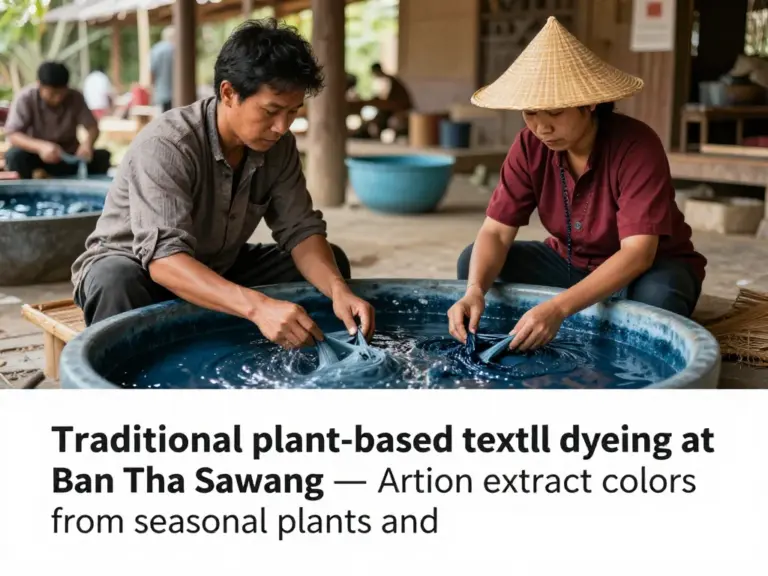
The foundation of natural dyeing at Ban Tha Sawang is the deep knowledge of local flora. The artisans do not rely on chemicals; instead, they harvest bark, leaves, fruits, and roots. Each plant provides a distinct palette. For instance, the deep, earthy reds often seen in Surin silk come from the lac insect resin (Krang), while vibrant yellows are extracted from the heartwood of the Jackfruit tree or the roots of Turmeric. This commitment to plant-based dyes ensures that the silk is not only beautiful but also hypoallergenic and environmentally friendly.
The Process of Color Extraction
The extraction of color is a labor-intensive process that requires patience and precision. First, the raw materials are chopped or crushed to increase the surface area. They are then boiled in large vats of water for several hours. This ‘decoction’ method releases the pigment into the water. To ensure the color adheres to the silk fibers, natural mordants like alum, mud, or even fermented pineapple juice are used. These substances act as a bridge between the dye and the silk, ensuring the colors remain fast and brilliant for decades.
Seasonal Dye Sources and Sustainability
One of the most fascinating aspects of how natural dyeing works at Ban Tha Sawang is its seasonality. Artisans follow the rhythm of the earth. During the rainy season, lush green leaves provide soft olives, while the dry season is better for harvesting certain barks and dried fruits. This seasonal approach prevents over-harvesting and ensures the local biodiversity remains intact. It also means that every batch of silk produced is unique, as the mineral content of the water and the maturity of the plants vary with the time of year.
| Source | Color Produced | Part Used |
|---|---|---|
| Lac (Krang) | Red / Purple | Resin |
| Indigo (Kram) | Blue | Leaves |
| Jackfruit Wood | Yellow / Gold | Heartwood |
| Ebony Fruit | Black / Dark Grey | Fruit |
คำถามที่พบบ่อย (FAQ)
What makes Ban Tha Sawang silk different from others?
The silk from Ban Tha Sawang is unique due to its extremely fine weaving technique (often using over 1,000 heddles) and its exclusive use of natural dyes, which provide a soft, organic glow that synthetic dyes cannot replicate.
Can I visit the village to see the dyeing process?
Yes, Ban Tha Sawang is open to tourists. Visitors can observe the entire process from silk reeling and natural dyeing to the complex weaving on massive traditional looms.
Are natural dyes long-lasting?
Absolutely. When properly fixed with natural mordants as they do in Ban Tha Sawang, natural dyes are incredibly light-fast and wash-fast, often becoming more beautiful as they age.
Is the dyeing process environmentally friendly?
Yes, the process is entirely sustainable. The waste water from the dye vats is non-toxic and often used to fertilize local gardens, completing a circular ecological loop.
What is the best time of year to visit?
While the village is active year-round, the cool season (November to February) is the most comfortable for walking around and observing the outdoor dyeing and drying processes.
References
- Silk weaving and natural dye at Ban Tha Sawang Surin: A Complete Visitor’s Guide to Tradition, Techniques, and Cultural Experiences
- Why Ban Tha Sawang’s silk weaving matters: history, cultural significance, and what makes Surin silk unique
- Hands-on experiences and workshops: what visitors can expect, booking tips, and ethical tourism practices