- Top kayaking routes and day-by-day itineraries among limestone karsts, hidden lagoons, and photo-worthy spots
- Why Kayaking is the Ultimate Way to Experience Thailand’s Karsts
- Itinerary 1: Krabi’s Ao Thalane – The Jungle River Kayak
- Itinerary 2: Phang Nga Bay – The Sea Cave Masterpiece
- Itinerary 3: Koh Phi Phi Islands – Exploring the Emerald Grottoes
- Planning Your Perfect Kayaking Trip Logistics
- Conclusion: The Silent Paddle Awaits
- คำถามที่พบบ่อย (FAQ)
- Do I need prior kayaking experience for Thai routes?
- Are there risks associated with the sea caves (Hongs)?
- Can I kayak directly from Railay Beach?
Welcome, fellow adventurers! Thailand is globally renowned for its stunning limestone karsts rising dramatically from emerald waters. While boat tours are popular, the true magic is unveiled when you glide silently through these geological wonders in a kayak. This guide details the Top kayaking routes and day-by-day itineraries among limestone karsts, hidden lagoons, and photo-worthy spots, providing the expertise needed to plan an unforgettable trip.
Why Kayaking is the Ultimate Way to Experience Thailand’s Karsts
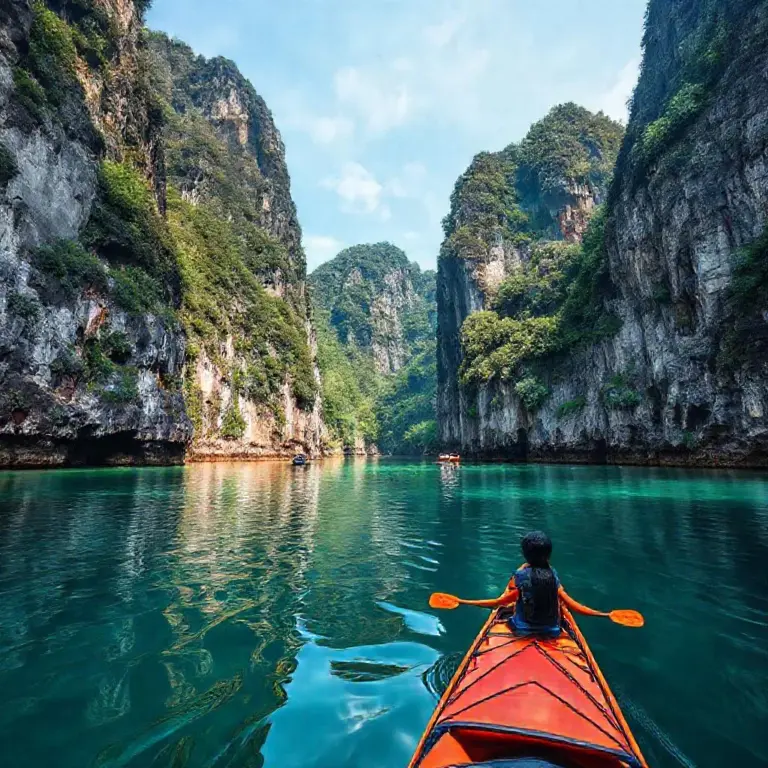
The towering limestone formations, sculpted over millennia, create a labyrinthine landscape perfect for exploration. Unlike larger tour boats, kayaks allow access to narrow sea caves (hongs) and shallow, secluded lagoons that are otherwise inaccessible. This experience offers unparalleled tranquility and intimacy with nature, making it a must-do for any Thailand tourism itinerary.
Essential Gear and Safety Tips for Thai Waters
Before setting out, ensure you have the right equipment. Always wear a properly fitted life vest. For sun protection, high-SPF sunscreen, a wide-brimmed hat, and UV-protective clothing are non-negotiable. Respect the tides; local guides are invaluable for understanding safe entry and exit points for sea caves.
Itinerary 1: Krabi’s Ao Thalane – The Jungle River Kayak
Ao Thalane, located near Krabi Town, offers a different experience: kayaking through a mangrove forest carved between steep canyon walls. This route is generally calmer and suitable for beginners.
Day 1: Canyon Exploration and Hidden Pools
- Morning (9:00 AM): Launch point at Ao Thalane Pier. Initial paddle through wide mangrove channels.
- Midday (12:00 PM): Navigate deeper into the narrow canyons. Look for the hidden freshwater pools fed by small waterfalls (seasonal).
- Afternoon (3:00 PM): Focus on birdwatching and wildlife spotting among the roots. This area is a vital ecosystem.
Photo Spot Highlight: The Great Wall
At the end of the main canyon path, the walls close in dramatically. This spot offers incredible vertical photography opportunities showcasing the sheer scale of the karsts.
Itinerary 2: Phang Nga Bay – The Sea Cave Masterpiece
Phang Nga Bay, famous for James Bond Island (Khao Phing Kan), is the quintessential destination for sea kayaking among colossal limestone monoliths. This area requires careful navigation and often involves entering dark sea caves at low tide.
Day 2: Hongs and Hidden Lagoons
Most tours start near the mainland village of Bang Rong or from Koh Yao Noi. The goal is to reach the ‘Hongs’—collapsed cave systems open to the sky.
- Morning Launch: Depart early (around 8:30 AM) to maximize daylight and avoid the largest crowds at the caves.
- Sea Cave Transit: Paddle towards the designated sea cave entrance (e.g., the cave leading into the Hong of Koh Panak or Koh Hong). You will lie down in the kayak as a guide pushes you through the low, dark tunnel.
- The Lagoon Reveal: Emerging into the Hong is breathtaking. These are circular, jungle-filled lagoons completely surrounded by 100-meter high cliffs. This is where you experience true isolation.
- Lunch Break: Enjoy a packed lunch floating peacefully in the center of the lagoon.
Photo Spot Highlight: Koh Hong’s Central Chamber
The contrast between the dark, wet cave entrance and the bright, green interior of the Hong makes for stunning, high-dynamic-range photography.
Itinerary 3: Koh Phi Phi Islands – Exploring the Emerald Grottoes
While Phi Phi is known for Maya Bay, kayaking around the less-visited northern side of Koh Phi Phi Leh reveals dramatic cliffs and small, jewel-toned grottoes.
Day 3: Viking Cave and Loh Samah Bay Circuit
This itinerary is best suited for intermediate paddlers due to potential open water crossings between formations.
| Time Slot | Activity | Focus |
|---|---|---|
| 8:00 AM | Start from Tonsai Bay (Phi Phi Don) | Secure rental and brief guide check. |
| 9:30 AM | Paddle towards Viking Cave | Observe the massive cliff face and nesting swiftlets. |
| 11:00 AM | Circumnavigate Koh Phi Phi Leh | Search for small, unlisted rock arches and shallow reefs. |
| 1:00 PM | Snorkeling/Rest at Loh Samah Bay | A protected cove perfect for a break before returning. |
To truly appreciate the scale of these formations, consider booking a guided overnight camping trip on a quiet beach in Phi Phi Leh, allowing you to paddle during the magical sunset hours when the tour boats depart.
Video Guide: Kayaking in Phang Nga Bay
For a visual guide demonstrating the required technique for entering the sea caves, watch this short clip:
Planning Your Perfect Kayaking Trip Logistics
Successful exploration hinges on logistics. Choosing the right base location dictates the quality of your experience. Krabi and Phuket are the primary hubs for accessing these spectacular karst landscapes.
Best Time to Visit
The dry season, running from November to April, offers the calmest seas and clearest skies, ideal for these **Top kayaking routes and day-by-day itineraries among limestone karsts, hidden lagoons, and photo-worthy spots**. The shoulder months (May and October) can offer fewer crowds with manageable weather.
Map Overview of Key Kayaking Hubs
To visualize the proximity of these destinations, here is a general overview of the region:
Conclusion: The Silent Paddle Awaits
Kayaking through Thailand’s limestone seascape is more than just a vacation activity; it’s an immersion into dramatic natural architecture. Whether you choose the sheltered mangroves of Ao Thalane or the epic sea caves of Phang Nga Bay, these carefully planned itineraries ensure you capture the very best of what the Andaman Sea has to offer. Equip yourself well, respect the environment, and prepare for truly photo-worthy moments!
คำถามที่พบบ่อย (FAQ)
References
Official Tourism Authority of Thailand Portal
Department of National Parks, Wildlife and Plant Conservation
- Lakeside camping at Cheow Lan Lake: kayak among limestone karsts — Ultimate guide to planning, routes, gear, and safety
- Why Cheow Lan Lake is a must-visit: landscape, best seasons, and eco-conscious camping tips
- Planning your trip: permits, accommodation options (floating bungalows vs. wilderness camping), and guided vs. self-guided kayak tours