Understanding Trade Routes and Cultural Exchange: Artifacts, Timelines, and Historical Context
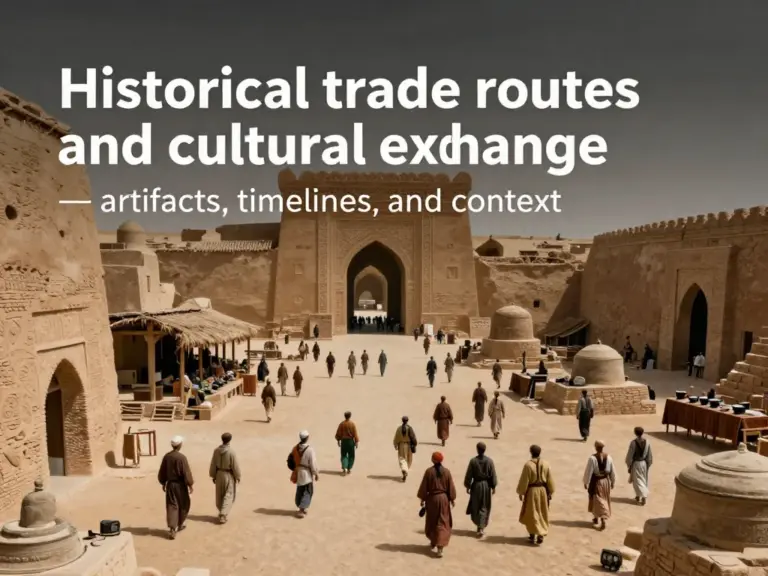
Thailand has long served as a vibrant crossroads of civilizations. For centuries, its strategic location between the Indian Ocean and the South China Sea made it a vital hub for merchants, monks, and explorers. Understanding trade routes and cultural exchange is not just about tracking the movement of goods like spices and silk; it is about uncovering the profound ways in which ideas, religions, and artistic styles merged to create the unique Thai identity we see today.
The Maritime Silk Road: Thailand’s Strategic Position
The history of Southeast Asia is inextricably linked to the monsoon winds. Early mariners learned to navigate these seasonal patterns, leading to the establishment of port-cities along the Thai peninsula. Understanding trade routes and cultural exchange requires looking at sites like Kra Buri and Takua Pa, where ancient ships sought refuge and traded precious commodities. These routes brought more than just wealth; they brought the foundational elements of Southeast Asian statecraft and spirituality.
Artifacts as Silent Witnesses of History
Archaeological findings provide the most tangible evidence of these ancient interactions. From Roman coins found in Kanchanaburi to Persian glassware in Southern Thailand, the variety of artifacts is staggering. These objects tell stories of long-distance diplomacy and the sophisticated tastes of ancient societies.
Ceramics and Glass Beads
One of the most significant indicators of cultural exchange is the presence of foreign ceramics. Chinese porcelain from the Tang and Song dynasties has been unearthed across Thailand, often alongside locally produced Sangkhalok ware from the Sukhothai period. Additionally, ‘Indo-Pacific’ glass beads, found in sites like Khuan Luk Pad (Bead Mound), suggest a complex manufacturing network that spanned from South Asia to the Gulf of Thailand.
| Artifact Type | Origin | Historical Period | Significance |
|---|---|---|---|
| Sangkhalok Ware | Sukhothai, Thailand | 14th – 16th Century | Exported widely across SE Asia and Japan. |
| Etched Carnelian Beads | India | Iron Age (500 BCE) | Evidence of early contact with the Indian subcontinent. |
| Bronze Drums | Dong Son (Vietnam) | Pre-historic/Early History | Symbol of status and ritual across the region. |
A Timeline of Cultural Integration
The evolution of Thai culture can be mapped through distinct eras of external influence. Each period added a new layer to the social fabric of the region.
- The Dvaravati Period (6th–11th Century): Characterized by the spread of Theravada Buddhism and Indian administrative concepts.
- The Khmer Influence (9th–13th Century): Brought Hindu-Brahmanical traditions and monumental stone architecture, seen in temples like Phimai and Phanom Rung.
- The Ayutthaya Era (14th–18th Century): A cosmopolitan golden age where Thailand traded with the Portuguese, Dutch, Japanese, and Persians.
The Impact of Understanding Trade Routes and Cultural Exchange on Tourism
For modern travelers, visiting Thailand is an exercise in living history. By understanding trade routes and cultural exchange, a visit to a museum or an ancient temple becomes a journey through time. Destinations like the Bangkok National Museum or the historical parks of Sukhothai and Ayutthaya offer a deep dive into how these global connections shaped the nation’s art, cuisine, and language.
คำถามที่พบบ่อย (FAQ)
1. What is the most famous trade route involving Thailand?
The Maritime Silk Road is the most famous, connecting Thailand to China, India, and eventually Europe via the sea.
2. Where can I see ancient trade artifacts in Thailand?
The National Museum Bangkok and the Chao Sam Phraya National Museum in Ayutthaya house extensive collections of trade-related artifacts.
3. How did trade influence Thai food?
Trade brought essential ingredients like chili (from the Americas via the Portuguese) and various spices and cooking techniques from India and China.
4. Why was the Isthmus of Kra important for trade?
It provided a shortcut for traders to transport goods overland between the Andaman Sea and the Gulf of Thailand, avoiding the long journey around the Malay Peninsula.