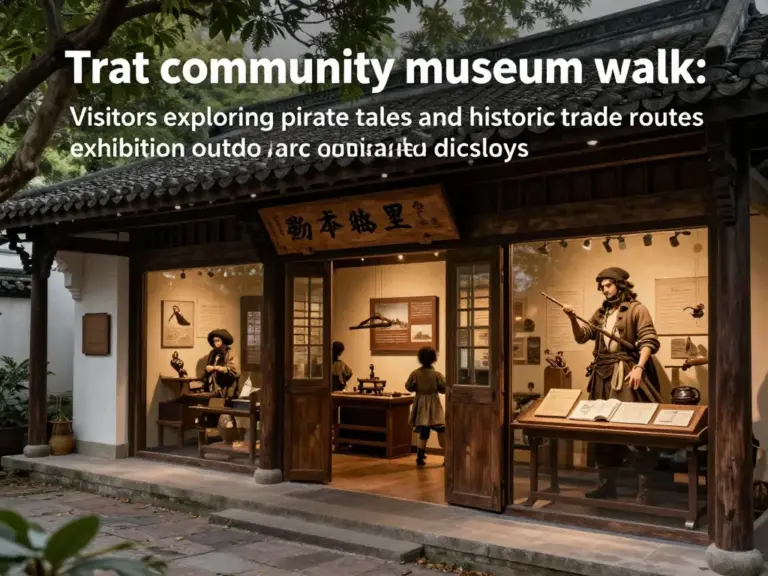
Trat Community Museum Walk: From Pirate Tales to Trade Routes — A Curated Visitor’s Guide
Welcome to the Trat Community Museum Walk, a journey through time in Thailand’s easternmost province. This curated guide invites you to step away from the beaches and dive deep into a history defined by resilient locals, daring pirate legends, and the bustling maritime trade routes of the Gulf of Thailand. Whether you are a history buff or a curious traveler, this walk offers a unique perspective on the cultural tapestry of Trat.
The Gateway to History: Understanding the Trat Community Museum Walk
The Trat Museum, housed in a stunning colonial-style wooden building that was once the provincial city hall, serves as the starting point for our exploration. This architectural gem was meticulously restored after a fire, now standing as a testament to the region’s endurance. Inside, visitors find exhibits detailing the French occupation of Trat, the heroic naval battle of Koh Chang, and the diverse ethnic groups—including Thai, Chinese, and Khmer—that have coexisted here for centuries.
Pirates of the Gulf: Legends and Lore
One of the most captivating aspects of the Trat Community Museum Walk is the lore of the sea. For centuries, the jagged coastline and hidden coves of Trat provided the perfect sanctuary for pirates. These maritime outlaws weren’t just characters from fiction; they were a significant part of the local economy and social hierarchy. The museum displays artifacts recovered from shipwrecks and old coastal settlements that hint at a time when the line between a merchant and a pirate was often blurred.
Trat has long been a strategic hub on the maritime Silk Road. Its location allowed it to serve as a vital link between the Siamese capital and the ports of Cambodia and Vietnam. As you walk through the community, you’ll see how the architecture reflects these trade influences. Chinese shophouses with ornate carvings sit alongside traditional Thai stilt houses, illustrating the wealth generated by the trade of gemstones, spices, and forest products.
| Era | Primary Trade Goods | Key Influencers |
|---|---|---|
| Ayutthaya Period | Spices, Woods | Siamese Merchants |
| Rattanakosin (Early) | Gemstones, Ceramics | Chinese Settlers |
| Colonial Era | Rubber, Peppercorn | French & Local Elite |
The Cultural Mosaic of the Old Town
Continuing the Trat Community Museum Walk takes you into the heart of the ‘Khlong Bang Phra’ community. This area is the soul of old Trat. Here, the local community has worked tirelessly to preserve their heritage. You can visit small private collections, traditional medicine shops, and local craft workshops. The atmosphere is calm and inviting, a stark contrast to the bustling tourist hubs of Thailand’s more famous islands.
Visitor Information and Best Practices
To make the most of your visit, keep the following in mind:
- Opening Hours: The main museum is generally open Tuesday – Sunday, 09:00 – 16:00.
- Dress Code: While casual, please dress respectfully when entering local temples or community spaces.
- Support Local: Purchase snacks or handicrafts from the community vendors along the walk to support the local economy.
คำถามที่พ่อยบ่อย (FAQ)
Q1: How long does the Trat Community Museum Walk take?
A1: A thorough walk, including time at the main museum and exploring the Khlong Bang Phra area, typically takes 2 to 3 hours.
Q2: Is the museum accessible for international tourists?
A2: Yes, the Trat City Museum provides English descriptions for most of its major exhibits, making it very accessible for international visitors.
Q3: Are there any entrance fees?
A3: There is usually a small entrance fee for the main Trat City Museum (approx. 30-50 THB), while walking through the community streets is free.