Mindful pilgrimage and walking meditation in Trat’s mangrove forests: a serene guide to practice, places, and planning
- Mindful pilgrimage and walking meditation in Trat’s mangrove forests: a serene guide to practice, places, and planning
- The Convergence of Practice: Mindfulness Meets Mangroves
- Top Locations for Mindful Pilgrimage and Walking Meditation in Trat’s Mangrove Forests
- Planning Your Serene Retreat: Logistics and Preparation
- Embedding Sound into Your Practice: A Guided Session
- The Spiritual Takeaway: Returning from the Mangroves
- คำถามที่พบบ่อย (FAQ)
- Is Trat safe for solo travelers interested in meditation retreats?
- Can I practice walking meditation in the mangroves during high tide?
- Are there any formal meditation centers near the Trat mangroves?
The search for genuine tranquility often leads travelers off the beaten path. While Thailand is famous for its bustling temples and vibrant beaches, the eastern province of Trat offers a profound alternative: an immersive experience in its ancient mangrove ecosystems. This guide is dedicated to exploring how to undertake a **Mindful pilgrimage and walking meditation in Trat’s mangrove forests**, blending ancient spiritual practice with the unique, living architecture of one of Southeast Asia’s most vital coastal habitats. This journey is not merely a walk; it is an intentional return to the present moment, guided by the rhythmic sounds of the tides and the rustling canopy.
The Convergence of Practice: Mindfulness Meets Mangroves
Mindfulness—the practice of paying attention on purpose, in the present moment, non-judgmentally—finds a perfect sanctuary within the dense, interconnected root systems of a mangrove forest. Unlike static meditation in a hall, walking meditation (Kinhin) requires continuous, gentle movement, mirroring the constant flow of the brackish water surrounding you. Trat’s mangroves, particularly around the Trat Bay area and Koh Chang National Park fringes, offer unparalleled natural settings for this deep engagement.
Understanding the Environment for Deeper Practice
To practice effectively, one must first respect the environment. Mangroves are tidal ecosystems; their schedule is dictated by the moon. Plan your walks around low tide when the exposed mudflats and root systems offer the most stable footing and the richest sensory experience. The air is thick with humidity and the scent of salt and decay—a potent reminder of life’s cycles.
Key Elements of Mindful Walking in Trat
The goal is not distance, but presence. Incorporate these elements into your practice:
- Pace: Walk slowly, perhaps one step every five seconds. Feel the heel strike, the rolling of the foot, and the lift of the toes.
- Anchor: Use the sounds of the water—the gentle lapping against the stilts or the squelch of mud—as your primary anchor point, returning your awareness to it whenever the mind wanders.
- Observation: Notice the intricate pneumatophores (breathing roots) and the unique life forms—mudskippers, crabs—without judgment. They simply *are*.
Top Locations for Mindful Pilgrimage and Walking Meditation in Trat’s Mangrove Forests
Trat offers several excellent, less-trafficked areas perfect for deep contemplation. Choosing the right setting is crucial for a successful **Mindful pilgrimage and walking meditation in Trat’s mangrove forests**.
1. Khung Kraben Bay & Mangrove Boardwalk (Laem Sok)
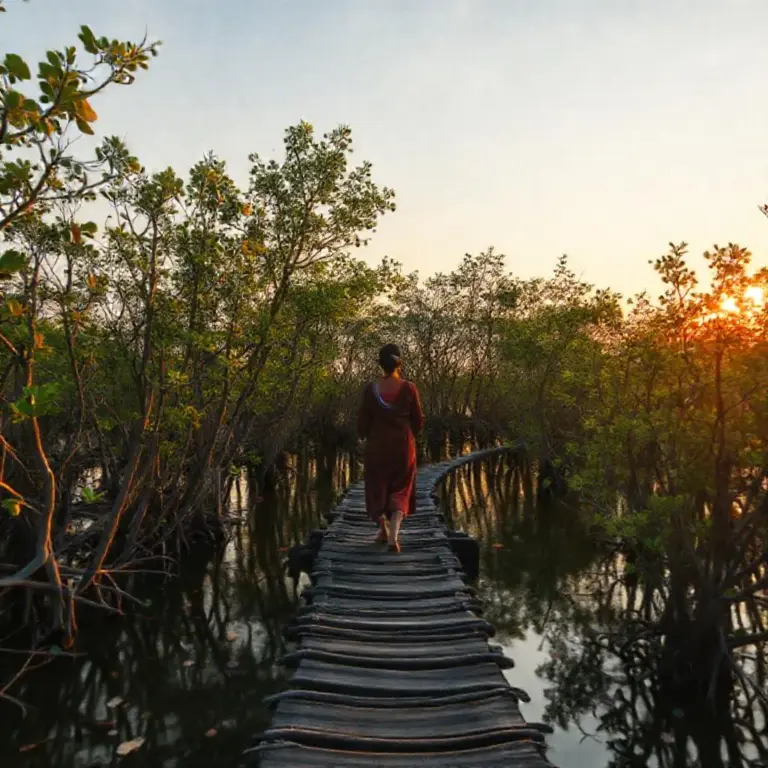
This area is perhaps the most accessible and infrastructure-ready. The well-maintained wooden boardwalk winds directly over the mangrove ecosystem, offering safe passage and minimal impact on the environment. It’s ideal for beginners seeking structure.
2. Trat Old Town Mangrove Trails
For a more authentic, less tourist-focused experience, explore the trails near Trat Old Town. These paths often lead past traditional stilt houses and offer glimpses into the local community’s symbiotic relationship with the sea. Here, the pilgrimage feels more connected to human tradition.
3. Koh Chang National Park (Selected Areas)
While Koh Chang is known for beaches, certain less-developed eastern coasts or interior areas surrounding the main island feature patches of dense mangrove. Accessing these might require local guidance, turning the search for the path itself into part of the pilgrimage.
Planning Your Serene Retreat: Logistics and Preparation
Successful contemplative travel requires thoughtful preparation. Since you are engaging in a deep, sensory experience, gear and timing are paramount.
What to Wear and Bring
Comfort and respect for nature dictate your packing list:
- Light, breathable, quick-drying clothing (Long sleeves offer protection from sun and insects).
- Water bottle (Stay hydrated; the humidity is intense).
- Natural insect repellent (Essential, especially during dusk/dawn).
- Sturdy, non-slip footwear suitable for damp wood or soft earth.
Timing Your Meditation Practice
The tidal schedule is the single most important planning factor for any **Mindful pilgrimage and walking meditation in Trat’s mangrove forests**.
- Low Tide Windows: Check local tide charts. The best time for walking stability is typically 1-2 hours before and after the lowest point of the tide.
- Best Time of Day: Sunrise (for stillness) or late afternoon (for witnessing the transition to evening). Avoid midday heat entirely.
- Respect the Silence: If you encounter local residents or other visitors, maintain silence or communicate with gestures. This is a shared sanctuary.
Embedding Sound into Your Practice: A Guided Session
Sometimes, a gentle auditory guide can deepen focus. While we encourage self-guided practice, listening to nature sounds or a guided meditation track can enhance the experience. Below is a resource to help set the mood before or after your walk.
Use this soundscape to transition your mind from the external world to the internal rhythm required for mindful walking. The slow, steady rhythm of nature is the best teacher here.
The Spiritual Takeaway: Returning from the Mangroves
A pilgrimage is defined by its return. As you leave the dense shade of the mangroves, the clarity gained from focused attention on breath and step should remain. The experience of navigating the complex, resilient mangrove ecosystem serves as a powerful metaphor for life itself—interconnected, cyclical, and beautifully adaptive. Trat provides the rare opportunity to fuse physical travel with deep inner work, solidifying its place as a destination for the discerning, contemplative traveler.
คำถามที่พบบ่อย (FAQ)
Yes, Trat is generally very safe, especially the areas with established boardwalks like Khung Kraben. Locals are welcoming. For remote trails, it is always advisable to inform your accommodation of your walking route and expected return time.
It is strongly discouraged. During high tide, the pathways can become submerged, slippery, or entirely impassable. Furthermore, the sensory experience changes dramatically, losing the grounding feeling of the earth beneath your feet.
While the focus here is on self-guided practice integrated with nature, Trat province does host several smaller, localized Buddhist temples (wats) that may offer short-term stays or basic meditation instruction, often requiring prior contact in Thai.
References
Official Tourism Authority of Thailand Resources
UNESCO Guide to Mangrove Ecosystem Importance