Why backstrap weaving matters: Tai Lue cultural heritage, symbolism, and the craft’s role in community identity and tourism
- Why backstrap weaving matters: Tai Lue cultural heritage, symbolism, and the craft’s role in community identity and tourism
Focus Area: This article explores the profound significance of the **Tai Lue backstrap weaving** tradition, particularly as it intersects with cultural preservation and ethical tourism within Northern Thailand.
In the verdant hills of Northern Thailand, particularly in provinces bordering Laos, live the Tai Lue people—a vibrant ethnic group whose cultural narrative is meticulously chronicled not in books, but in thread. The practice of **Tai Lue backstrap weaving** is far more than a simple craft; it is a living archive, a spiritual practice, and an essential economic engine. For Thailand tourism stakeholders and cultural enthusiasts alike, understanding why this textile art matters is key to appreciating the depth of the nation’s intangible heritage. This complex art form carries centuries of history, encoded symbolism, and the very identity of the Tai Lue community.
The Ancient Art of Tai Lue Backstrap Weaving
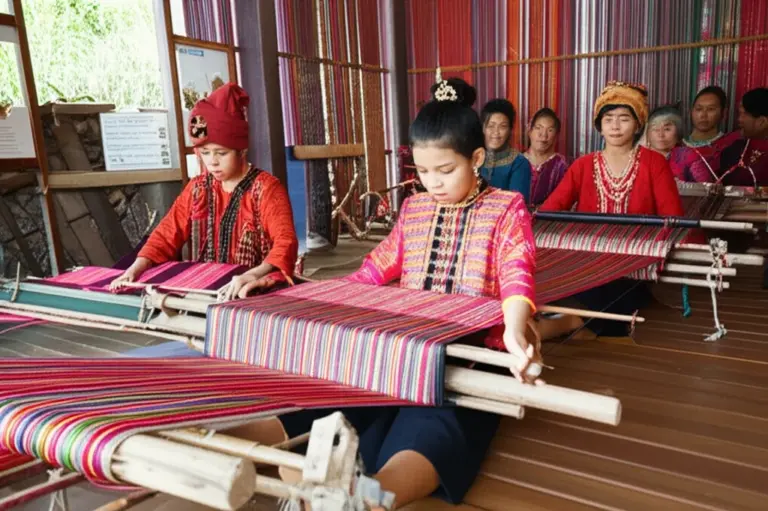
The backstrap loom represents one of the oldest known weaving technologies globally. Unlike large, mechanized looms, the backstrap loom is portable, intimate, and entirely powered by the weaver’s own body. For the Tai Lue, this tool is an extension of self, used almost exclusively by women, who begin learning the complex mechanics before they even reach adulthood.
Tools of Tradition: Understanding the Loom
The loom consists of simple components: two vertical supports (posts or trees), a cloth beam, a warp beam, and the crucial element—the strap that anchors the tension to the weaver’s lower back. This physical connection ensures that the weaver is constantly attuned to the tension and rhythm of the creation process. The inherent limitations of the loom—the width is determined by the weaver’s arm span—mean that each textile is inherently unique and tailored to the individual artisan.
Materials and Natural Dyes: A Connection to the Land
Authenticity in Tai Lue weaving is deeply rooted in material sourcing. Traditionally, the primary fiber is cotton, often hand-spun. The vibrant palette seen in heritage pieces comes entirely from the local environment. Indigo provides deep blues, while turmeric, sappanwood, and various barks and roots yield reds, yellows, and browns. This reliance on natural dyes signifies a profound, sustainable relationship with the land, making each textile a true reflection of its geographical origin.
Decoding the Textile: Symbolism Woven into Every Thread
If the loom is the body of the craft, the patterns are its soul. Tai Lue textiles are famous for their geometric precision and deeply embedded symbolism. These are not random arrangements; they are a visual language that communicates social status, marital status, lineage, and cosmological beliefs. Understanding this symbolism is crucial to grasping why this craft matters beyond mere aesthetics.
Motifs as Language: Stories of Life and Cosmology
Common motifs include representations of the Naga (serpent deity), elephants, flowers, and human figures. For instance, certain diamond patterns might symbolize protection or fertility, while the arrangement of lines can map out ancestral migration routes. A blanket or ceremonial shawl is, therefore, a wearable history book, ensuring that the community’s narrative survives the oral tradition.
Color Theory in Tai Lue Fabric
Color selection is governed by tradition. Deep indigo blue often represents water and the spiritual realm, while vibrant reds signify life force and power. The interplay between these colors, often set against the natural cream of unbleached cotton, creates a visual harmony that is both striking and deeply meaningful.
See the Process: To fully appreciate the dedication involved, observe the intricate movements required for this ancient technique.
Weaving Identity: The Craft’s Role in Community Cohesion
The loom acts as a social nexus. The continuation of weaving ensures that the Tai Lue identity remains strong and distinct, especially as younger generations integrate more into modern Thai society. The textile piece itself is central to life cycle rituals.
Passing Down Knowledge: Intergenerational Transfer
The transfer of weaving skills from grandmother to mother to daughter solidifies familial bonds and reinforces cultural continuity. When a young woman weaves her first complex textile, it marks her transition into womanhood and her full integration into the community’s traditional roles. This knowledge transfer is a powerful act of cultural resistance against homogenization.
Economic Empowerment Through Handicraft
In many rural Tai Lue villages, weaving is the primary source of supplementary income. As global demand for authentic, handmade goods rises, these textiles offer a crucial pathway out of poverty. However, this economic viability must be carefully managed to ensure that the production speed does not compromise the quality or the integrity of the traditional patterns.
Backstrap Weaving as a Pillar of Sustainable Tourism in Thailand
For the Thailand tourism sector, the **Tai Lue backstrap weaving** tradition represents an invaluable cultural asset. It moves tourism beyond simple sightseeing into meaningful cultural exchange. Travelers are increasingly seeking authentic experiences that support local economies directly, making homestays and craft workshops centered around weaving highly desirable.
Authentic Encounters for the Modern Traveler
Ethical tourism initiatives focus on creating direct links between tourists and weavers. When visitors purchase directly, they ensure that the majority of the revenue remains within the village, funding education, healthcare, and the continuation of the craft itself. Workshops that teach basic weaving techniques offer transformative experiences, allowing visitors a brief moment to understand the dedication required for a single scarf.
Challenges in Preservation vs. Commercialization
The greatest threat to the craft today is often success. High market demand can tempt artisans to use synthetic, cheaper dyes or simplify complex patterns to speed up production. Responsible tourism bodies must collaborate with community leaders to establish clear quality benchmarks, ensuring that the textiles sold to tourists honor the legacy woven into every piece.
| Aspect | Cultural Significance | Tourism Value |
|---|---|---|
| Technique | Intimate connection to ancient methods (E-E-A-T demonstration). | Offers unique, hands-on workshop opportunities. |
| Dyes | Direct connection to local ecology and sustainable practices. | Appeals to eco-conscious and responsible travelers. |
| Pattern | Visual language representing lineage and cosmology. | Provides depth and storytelling behind souvenirs. |
Conclusion: Preserving the Legacy
The importance of Tai Lue backstrap weaving cannot be overstated. It is a cultural bedrock, a form of non-verbal historical record, and an engine for community resilience. As travelers increasingly seek depth over distance, supporting these artisans ensures that the intricate patterns and ancient knowledge of the Tai Lue people continue to thrive, weaving Thailand’s cultural tapestry richer for generations to come.
คำถามที่พบบ่อย (FAQ)
Where do the Tai Lue people primarily reside in Thailand?
The Tai Lue communities in Thailand are predominantly found in the northern provinces, especially Chiang Rai and Chiang Mai, near the border with Laos.
What is the main difference between Tai Lue weaving and other Thai weaving styles?
Tai Lue weaving is distinctly characterized by its complex geometric patterns, often created using the supplementary weft technique, and its specific reliance on rich indigo dyes derived from locally sourced plants.
How long does it take to create a traditional Tai Lue textile?
The time varies significantly based on complexity. A small, simple item might take a few days, but a large, ceremonial cloth featuring intricate supplementary weft work can take several weeks or even months of continuous labor.
Can tourists buy directly from the weavers?
Yes. Buying directly from weavers in their villages, often facilitated through responsible local guides or community centers, is the most ethical way to support the craft and ensures the artisan receives fair compensation.
References
- Backstrap weaving workshop with the Tai Lue community in Nan: An immersive cultural experience learning traditional techniques, history, and sustainable practices
- What to expect at a Tai Lue backstrap weaving workshop in Nan: itinerary, skill levels, duration, costs, and how to book an authentic local experience
- Hands-on techniques and materials: step-by-step backstrap loom setup, common patterns, natural dyes, and tips for beginners to create a souvenir