What to expect at a Tai Lue backstrap weaving workshop in Nan: itinerary, skill levels, duration, costs, and how to book an authentic local experience
- What to expect at a Tai Lue backstrap weaving workshop in Nan: itinerary, skill levels, duration, costs, and how to book an authentic local experience
- The Heart of Nan: Understanding the Tai Lue People and Their Craft
- Planning Your Immersion: Key Workshop Details
- A Typical Workshop Itinerary: From Warp to Weft
- Securing an Authentic Experience: How to Book
- Essential Cultural Etiquette for Weaving Workshops
- Video Showcase: Witnessing the Craft in Action
- คำถามที่พบบ่อย (FAQ)
Welcome to Nan, a province where time slows down, and ancient artistry thrives. For travelers seeking genuine connection over fleeting snapshots, participating in a Tai Lue backstrap weaving workshop in Nan offers an unparalleled opportunity. This guide breaks down everything you need to know, ensuring your cultural immersion is seamless, respectful, and deeply rewarding.
The Tai Lue, an ethnic group primarily residing in the northern reaches of Thailand, carry a rich legacy woven directly into their textiles. Their backstrap loom technique is not just a craft; it is a historical narrative, passed down through generations, often dictating social status and marking significant life events. Understanding what awaits you—from the initial setup to the final knot—is key to maximizing this unique experience.
The Heart of Nan: Understanding the Tai Lue People and Their Craft
Nan Province, nestled near the Lao border, remains one of Thailand’s most culturally intact regions. The Tai Lue communities here have fiercely protected their traditions, making them the ideal setting to learn this intricate art form. When you engage in a workshop, you are directly supporting the preservation of this heritage.
Historical Significance of Backstrap Weaving
The backstrap loom (known locally by various names) is one of the oldest known weaving devices. The tension that drives the weaving process is supplied by the weaver’s own body, creating a deeply personal connection to the resulting fabric. Traditional Tai Lue patterns often feature complex geometric motifs, symbolizing elements of nature, cosmology, and tribal identity. Learning the meaning behind the patterns adds profound depth to your finished product.
Planning Your Immersion: Key Workshop Details
To plan effectively, you must understand the practicalities involved in attending a Tai Lue backstrap weaving workshop in Nan. Authenticity often means flexibility, so confirming details in advance is crucial.
Skill Levels Required: Beginner to Advanced
Most reputable local workshops welcome absolute beginners. However, the complexity of what you achieve will depend heavily on the time allotted:
- Beginner (Half-Day/Full-Day): Focuses on learning to set up the loom (warping) and mastering the basic plain weave structure. You will likely produce a small sample piece or coaster.
- Intermediate (Multi-Day): Allows time to introduce supplementary weft techniques or simple supplementary warp patterns, resulting in a small scarf or textile panel.
- Advanced: Typically requires several days or even weeks and is reserved for those serious about mastering complex brocade or ikat dyeing techniques associated with the Tai Lue.
Duration and Scheduling Options
Workshops vary significantly. Due to the physical nature of backstrap weaving, sessions are often broken up. A typical half-day session might last 3-4 hours, with the instructor focusing on setup and basic tension control. Full-day options allow for deeper pattern exploration.
Estimated Costs and Inclusions
Costs are generally very reasonable and directly support the artisan family. Prices fluctuate based on location (closer to Nan City vs. remote villages) and duration.
| Duration | Estimated Cost (THB) | Inclusions |
|---|---|---|
| Half-Day Intro | 500 – 800 THB | Instruction, basic materials |
| Full-Day Intensive | 1,200 – 1,800 THB | Detailed instruction, lunch with family, materials |
| Multi-Day Course | Negotiable (Daily Rate) | Accommodation options sometimes available, advanced technique focus |
A Typical Workshop Itinerary: From Warp to Weft
The most exciting part of attending a Tai Lue backstrap weaving workshop in Nan is seeing the process demystified. Here is a generalized flow you can expect:
Step 1: Introduction to the Loom and Materials
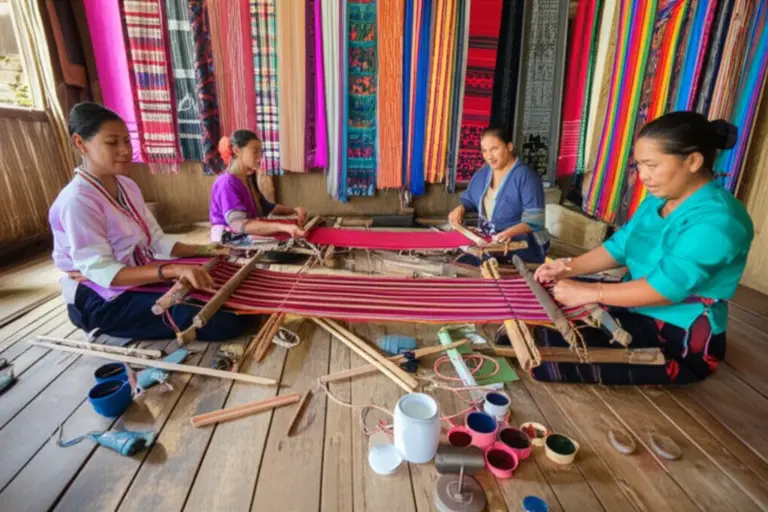
You will first be introduced to the loom itself. This involves understanding the warp beam (anchored to a post or tree), the cloth beam, the heddles, and the shed stick. You will learn how the weaver uses their body weight via the backstrap to maintain the necessary tension.
Step 2: Learning Basic Weaving Patterns (e.g., plain weave, twill)
The instructor will guide you through creating the shed—the opening between the warp threads—and passing the shuttle (or bobbin) through. For beginners, mastering the rhythm of the plain weave is the primary goal. Color selection, often using naturally dyed local cotton or silk threads, is also covered here.
Step 3: Hands-On Creation and Troubleshooting
This is where the real learning happens. You will sit at the loom and practice. Expect your first few attempts to be uneven! The artisan will patiently help you adjust the tension and correct dropped threads. This collaborative troubleshooting is invaluable.
Step 4: Cultural Exchange and Wrap-up
Beyond the threads, these workshops are opportunities for cultural exchange. Ask about their lives, the importance of weaving to their family, and the meaning of the patterns they choose. This interaction solidifies the experience as true cultural tourism.
Securing an Authentic Experience: How to Book
Booking an authentic experience requires looking beyond mainstream tour operators. You want to connect directly with the weaving community, often found in villages just outside central Nan City, such as those near Wiang Sa or Pua.
Choosing Responsible Local Operators
Look for workshops promoted by local homestays or community-based tourism (CBT) organizations in Nan. These groups ensure that the majority of your fee goes directly to the artisan family, fostering sustainable travel practices.
Essential Booking Tips for Travelers
- Language Barrier: While many younger members speak some English, having a few basic Thai phrases or arranging booking through a local guesthouse interpreter is highly recommended.
- Advance Notice: Give at least 48 hours’ notice, especially for multi-day sessions, as artisans need time to prepare the loom and materials specific to your desired project.
- Transportation: Clarify if the workshop fee includes transport from Nan City. If not, arrange a reliable local taxi or songthaew in advance.
Essential Cultural Etiquette for Weaving Workshops
Respecting local customs enhances your learning experience tremendously. Always ask permission before taking close-up photos of the artisan or their finished work. Dress modestly, covering shoulders and knees, as you are entering a traditional home environment. Tipping is appreciated but not mandatory; a small gift related to your home country can also be a thoughtful gesture.
Video Showcase: Witnessing the Craft in Action
See the incredible dedication and skill required to operate the backstrap loom in a real-world setting. This clip provides excellent context for the physical demands of the craft.
Experiencing the Tai Lue backstrap weaving workshop in Nan is more than a craft class; it is a tangible connection to Northern Thai history. Prepare to leave with not only a beautiful textile but also a profound appreciation for the patience and artistry inherent in this ancient tradition.
คำถามที่พบบ่อย (FAQ)
Here are answers to the most common questions regarding weaving workshops in Nan.
Do I need to know how to weave before booking?
No, most workshops are specifically designed for beginners. The first part of the session is dedicated to teaching you how to set up and manage the tension on the backstrap loom.
Can I purchase finished Tai Lue textiles at the workshop?
Absolutely. Artisans usually have finished pieces for sale, which is an excellent way to support them further. Prices for finished goods will vary based on complexity and material.
Is the workshop location easily accessible from Nan City center?
Accessibility varies. Some workshops are within a 30-minute drive of the city, while others require a longer journey into the rural districts. Always confirm the exact location and transportation arrangements when booking your Tai Lue backstrap weaving workshop in Nan.
What materials are used in traditional Tai Lue weaving?
Traditionally, materials included locally sourced cotton and silk. Many artisans now use high-quality, colorfast commercial threads, but authentic workshops often showcase locally grown and naturally dyed yarns.
References
For further reading on cultural preservation and ethical tourism practices in Northern Thailand:
- Community Based Tourism Network Thailand (Example Resource for CBT)
- UNESCO Intangible Cultural Heritage Resources
- Backstrap weaving workshop with the Tai Lue community in Nan: An immersive cultural experience learning traditional techniques, history, and sustainable practices
- Why backstrap weaving matters: Tai Lue cultural heritage, symbolism, and the craft’s role in community identity and tourism
- Hands-on techniques and materials: step-by-step backstrap loom setup, common patterns, natural dyes, and tips for beginners to create a souvenir