Thai cooking class in Chiang Mai using local market ingredients: The ultimate guide to authentic hands-on experiences
- Thai cooking class in Chiang Mai using local market ingredients: The ultimate guide to authentic hands-on experiences
- Why Chiang Mai is the Culinary Heart of Thailand
- The Farm-to-Wok Experience: Sourcing Your Ingredients
- What You Will Learn: Mastering Essential Thai Dishes
- Choosing the Best Authentic Cooking School
- Tips for Maximizing Your Hands-On Experience
- คำถามที่พบบ่อย (FAQ)
- Do I need prior cooking experience to join a class?
- Are vegetarian or vegan options available?
- How long does a typical cooking class and market tour last?
- Which local market is best for the ingredient sourcing portion of the class?
Chiang Mai, the cultural capital of Northern Thailand, is not just famous for its ancient temples and misty mountains; it is a gastronomic paradise. For travelers seeking a truly authentic cultural immersion, there is no better way to connect with the local heritage than through its food. This guide focuses on finding the perfect Thai cooking class in Chiang Mai using local market ingredients, transforming your vacation into a hands-on culinary adventure where you learn the secrets of Thai cuisine from the source.
Why Chiang Mai is the Culinary Heart of Thailand
Unlike the bustling South, Northern Thai cuisine (Lanna food) offers a distinct palette of flavors—often less sweet and more herbal, featuring dishes like the famous Khao Soi (curry noodle soup) and Sai Oua (Northern Thai sausage). Chiang Mai’s location in the fertile Ping River valley provides a wealth of fresh, organic ingredients essential for these regional specialties. The city’s strong agricultural roots mean that local markets are vibrant hubs of activity, offering an unparalleled selection of produce, spices, and exotic herbs that are often unavailable elsewhere.
The Farm-to-Wok Experience: Sourcing Your Ingredients
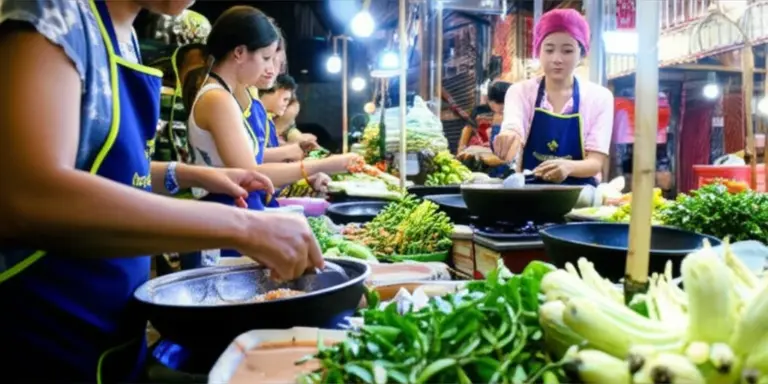
The defining characteristic of an authentic Thai cooking class in Chiang Mai using local market ingredients is the market tour. This isn’t just a quick stop; it’s a vital, educational part of the process. Before you even light a stove, you embark on a guided exploration of a local Talad (market). This experience teaches you how to select the freshest chili peppers, differentiate between various types of basil (holy, sweet, and lemon), and identify unique ingredients like galangal, kaffir lime, and turmeric root.
Many top schools utilize markets slightly off the main tourist routes to ensure the experience remains genuine. Popular choices include:
- Warorot Market (Kad Luang): A massive, bustling multi-story market offering everything from fresh produce and flowers to Northern Thai snacks and household goods.
- Somphet Market: Smaller and conveniently located near the Old City, often used for morning tours due to its excellent fresh produce selection.
- Local Farm Tours: Some high-end classes even include a visit to an organic farm where you can harvest your own vegetables and herbs before cooking.
What You Will Learn: Mastering Essential Thai Dishes
The curriculum of a quality cooking class is designed to give you a foundational understanding of Thai flavor profiles—the balance between sweet, sour, salty, and spicy. Most classes allow you to choose 4-5 dishes from a menu across various categories, ensuring a diverse and personalized learning experience.
| Category | Example Dishes Taught | Key Skill Focus |
|---|---|---|
| Noodle/Stir-Fry | Pad Thai, Pad See Ew | Wok technique, sauce balancing |
| Curry | Green Curry, Red Curry, Massaman Curry | Making curry paste from scratch (using a mortar and pestle) |
| Soup | Tom Yum Goong, Tom Kha Gai | Herbal infusion and broth preparation |
| Dessert | Mango Sticky Rice (Khao Niao Mamuang) | Coconut milk preparation, sticky rice steaming |
The highlight for many participants is the meticulous process of making curry paste. By using fresh local ingredients purchased that morning, you discover why homemade paste tastes infinitely better than store-bought varieties. This hands-on method is crucial for recreating authentic Thai dishes back home.
Choosing the Best Authentic Cooking School
With dozens of options available, selecting the right school is key to ensuring a high-quality experience. Look for these indicators of authenticity and excellence:
- Small Class Sizes: Optimal learning happens in groups of 10-12 people or fewer, allowing for personalized instruction and individual attention from the chef.
- Dedicated Market Tour: Verify that the class includes a guided market trip where you actively select the ingredients.
- Organic/Sustainable Focus: Many highly-rated schools source ingredients from their own or nearby organic gardens, enhancing the ‘local’ appeal.
- Hands-On Stations: Ensure you have your own dedicated cooking station, wok, and utensils, rather than just observing a demonstration.
Watch the Market Tour Experience
A glimpse into the vibrant atmosphere and educational value of the market tour preceding the cooking lesson.
Tips for Maximizing Your Hands-On Experience
To get the most value from your investment in a Thai cooking class, follow these expert tips:
Adjust Spice Levels
Thai recipes are inherently spicy. Be honest with your instructor about your tolerance. They can easily adjust the amount of chili used in your paste or stir-fry.
Keep the Recipes
Most schools provide a recipe book. Take notes on techniques, especially regarding the heat control of the wok and the precise timing of sauces. These subtleties are key to successful replication.
Arrive Hungry
You will cook a substantial amount of food (often 4-5 full dishes). The class culminates in eating your creations, often forming your lunch or dinner for the day.
A Thai cooking class in Chiang Mai using local market ingredients is more than just a lesson; it’s a deep dive into the heart of Thai culture. By starting at the market, you gain a profound appreciation for the freshness and diversity that defines this world-renowned cuisine. It’s an unforgettable, delicious souvenir you can take home and share for years to come.
คำถามที่พบบ่อย (FAQ)
References
- Chiang Mai Tourism Authority official site
- Guide to Northern Thai Cuisine (Lanna Food)
- Review of Thai Cooking Class standards in Thailand
- Why choose a local-market-based Thai cooking class in Chiang Mai — authenticity, sustainability, and cultural immersion
- How to find and book the best Chiang Mai classes that start at the market — tips, trusted operators, and long-tail search terms
- What to expect at the market tour — ingredients, vendor interactions, seasonal produce, and allergy/vegetarian options