How to choose between Ekkamai and Mo Chit terminals: comparing destinations, vehicle types (vans vs buses), and travel time
Navigating Bangkok’s massive transport network can be daunting for even the most seasoned travelers. When planning a trip out of the capital, the first question is often: How to choose between Ekkamai and Mo Chit terminals? Both hubs serve as vital gateways to different corners of Thailand, but they offer vastly different experiences in terms of geography, vehicle options, and accessibility. Understanding the nuances between the Eastern Bus Terminal (Ekkamai) and the Bangkok Bus Terminal Chatuchak (Mo Chit 2) is essential for a smooth journey.
Destination Comparison: Where Are You Heading?
The most critical factor in deciding how to choose between Ekkamai and Mo Chit terminals is your final destination. Ekkamai is strictly focused on the East. If you are looking for the beaches of Pattaya, the islands of Koh Samet (via Rayong), or the gateway to Cambodia at Koh Kong (via Trat), Ekkamai is your primary hub. It is compact and easy to navigate.
On the other hand, Mo Chit 2 is the giant of the north. It serves the Northern provinces (Chiang Mai, Chiang Rai), the Northeastern region known as Isan (Khorat, Udon Thani), and several Central and Western destinations. Interestingly, Mo Chit also offers routes to the East (like Pattaya), making it a versatile but much more crowded alternative to Ekkamai.
Vehicle Types: Vans vs. Buses
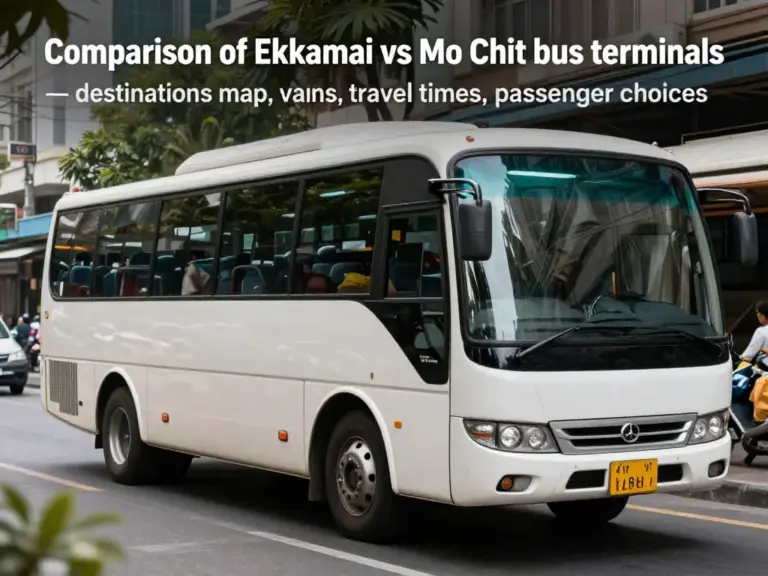
When considering vehicle types, both terminals offer a mix of large coaches and smaller minivans or minibuses. Vans/Minibuses are generally faster and depart more frequently, but they offer limited luggage space and can feel cramped. Large Buses (First Class or VIP) provide much higher comfort, reclining seats, and onboard toilets, making them ideal for long-haul journeys over 4 hours.
| Feature | Large Bus (Coach) | Minivan / Minibus |
|---|---|---|
| Comfort | High (Reclining seats) | Standard (Cramped) |
| Speed | Moderate | Fast |
| Luggage Space | Ample (Under-bus storage) | Very Limited |
| Safety | Higher perceived safety | Varies by driver |
Travel Time and Accessibility
Accessibility plays a huge role in how to choose between Ekkamai and Mo Chit terminals. Ekkamai is incredibly convenient, located right next to the Ekkamai BTS Skytrain station on Sukhumvit Road. You can walk from the train platform to the ticket counter in less than 2 minutes. This makes it the preferred choice for those staying in downtown Bangkok.
Mo Chit 2 is more isolated. While it shares a name with the Mo Chit BTS station, the terminal is actually a 10-15 minute taxi or bus ride away from the station. During peak traffic hours, reaching Mo Chit can add significant travel time to your itinerary. However, for those heading to the North, the time saved by departing from a terminal already positioned on the northern edge of the city outweighs the transit hassle.
Choosing Based on Facilities
Mo Chit 2 is a massive complex with extensive food courts, convenience stores, and even massage parlors. If you have a long wait, Mo Chit offers more to do. Ekkamai is much smaller; while it has a few 7-Elevens and small coffee stalls, it lacks the variety found at its northern counterpart. However, its small size means you won’t get lost looking for your platform.
คำถามที่พบบ่อย (FAQ)
Ekkamai is much closer to the central business district and is directly connected to the BTS Skytrain system.
Yes, both Ekkamai and Mo Chit 2 offer frequent services to Pattaya via both buses and minivans.
You should take a taxi, a motorbike taxi, or a local bus (such as number 77 or 138) from the BTS station to the terminal.
For journeys exceeding 3 hours, a large bus is highly recommended for safety, comfort, and luggage space.
References
- Using intercity vans and buses from Ekkamai and Mo Chit terminals: Ultimate guide to routes, schedules, fares, and tips for seamless travel
- Step-by-step guide to buying tickets and checking schedules: online booking, counter purchase, apps, and peak-time considerations
- Understanding fares, concessions, and luggage rules: pricing structure, discounts, baggage limits, and hidden fees