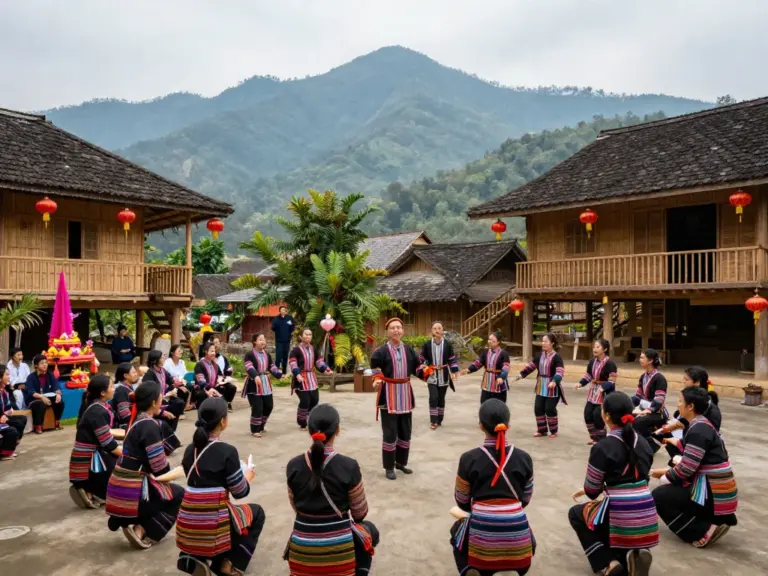
What is the cultural and historical significance of the Hmong New Year in Phetchabun?
- What is the cultural and historical significance of the Hmong New Year in Phetchabun?
- Historical Roots: A Journey of Migration and Identity
- Cultural Rituals: The Symbolism of the Ball-Tossing Game (Pov Pob)
- Spiritual Significance and Ancestral Worship
- Traditional Attire: A Visual Masterpiece
- คำถามที่พบบ่อย (FAQ)
- When is the Hmong New Year celebrated in Phetchabun?
- Can tourists attend the Hmong New Year festival?
- What is the significance of the silver jewelry worn during the festival?
- What is the main food served during the Hmong New Year?
The Hmong New Year in Phetchabun is more than just a seasonal celebration; it is a vibrant tapestry of ancestral heritage, social bonding, and spiritual renewal. Nestled in the misty highlands of Khao Kho and Phu Thap Boek, the Hmong community gathers annually to honor their roots and mark the transition from the old harvest to a new beginning. For travelers and cultural enthusiasts, understanding the Hmong New Year in Phetchabun offers a profound window into one of Thailand’s most resilient and colorful ethnic groups.
Historical Roots: A Journey of Migration and Identity
The Hmong people, who migrated from southern China into Southeast Asia over centuries, brought with them a rich oral history and deep-seated traditions. In Phetchabun, the Hmong population found a home in the rugged terrain that mirrored their ancestral lands. The New Year festival serves as a historical anchor, preserving the Hmong language, dress, and customs that might otherwise be diluted by modernization. Historically, this was the only time of year when families from distant mountain peaks could reunite, making it a critical event for tribal cohesion and the passing down of folklore to younger generations.
Cultural Rituals: The Symbolism of the Ball-Tossing Game (Pov Pob)
One of the most iconic sights during the Hmong New Year in Phetchabun is the ‘Pov Pob’ or ball-tossing ritual. Young men and women dress in their finest hand-embroidered traditional costumes and form two lines facing each other. They toss a small cloth ball back and forth while engaging in rhythmic conversation or singing. While it appears to be a simple game, its cultural significance is deep: it is a traditional matchmaking ritual. It allows youth to get to know one another in a respectful, community-supervised setting, ensuring the continuity of Hmong lineages and social structures.
Spiritual Significance and Ancestral Worship
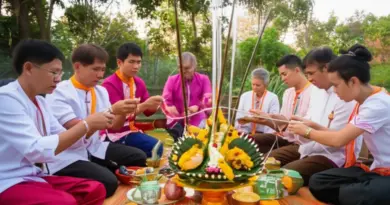
The festival is deeply spiritual, rooted in animistic beliefs and ancestor worship. Families perform rituals to ‘call the soul’ (Hu Plig) back home, ensuring that no family member’s spirit is left wandering. Offerings are made to the spirits of the house and the land to thank them for the year’s harvest and to ask for protection in the coming year. The slaughter of a pig or chicken often accompanies these ceremonies, symbolizing a communal feast that connects the living with the spiritual world. This spiritual element reinforces the Hmong worldview that humans, nature, and spirits are inextricably linked.
Traditional Attire: A Visual Masterpiece
The visual splendor of the Hmong New Year is largely due to the intricate clothing worn by participants. Women spend months hand-sewing, pleating, and embroidering skirts and jackets. In Phetchabun, you will often see the ‘Green Hmong’ and ‘White Hmong’ styles, each with distinct patterns. The silver jewelry worn—large neck rings and ornate earrings—is not just for decoration; it represents the family’s wealth and provides spiritual protection. During the festival, these garments serve as a proud display of ethnic identity and craftsmanship.
คำถามที่พบบ่อย (FAQ)
When is the Hmong New Year celebrated in Phetchabun?
Can tourists attend the Hmong New Year festival?
What is the significance of the silver jewelry worn during the festival?
What is the main food served during the Hmong New Year?
References
- Tourism Authority of Thailand (TAT)
- Official Phetchabun Provincial Website
- UNESCO Intangible Cultural Heritage Resources
- Hmong New Year in Phetchabun: Traditional Dress, Games, Music, and How to Experience Them Authentically
- How do traditional Hmong costumes look and what do their symbols and fabrics mean?
- Which traditional games and activities are played during Hmong New Year in Phetchabun (patrol, ball-toss, and courtship games)?