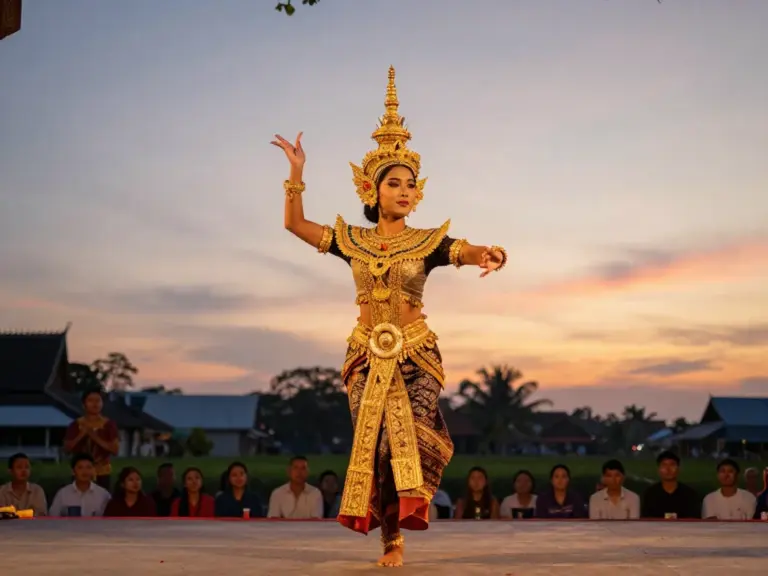
What is Nora dance and why is Phatthalung a unique place to see authentic Nora performances?
- What is Nora dance and why is Phatthalung a unique place to see authentic Nora performances?
- Understanding the Essence of Nora Dance
- Why Phatthalung is the Soul of Nora
- The Artistry and Symbolism in Nora
- Experiencing Nora in Phatthalung Today
- Conclusion
- คำถามที่พบบ่อย (FAQ)
- What is the main story behind Nora dance?
- Why did UNESCO recognize Nora dance?
- Can foreigners learn Nora dance in Phatthalung?
Nora dance, also known as Manora, is not merely a performance; it is the heartbeat of Southern Thai culture. For centuries, this vibrant art form has blended music, dance, and storytelling into a spiritual ritual that connects the living with their ancestors. If you are exploring Thailand tourism with a desire for deep cultural immersion, understanding the significance of Nora is essential. While it is performed across the southern provinces, Phatthalung stands out as the ultimate destination for those seeking the most authentic and historically rooted experience.
Understanding the Essence of Nora Dance
The Nora dance is a complex performing art characterized by highly stylized movements and improvisational singing. Performers wear elaborate, colorful costumes featuring intricate beadwork and long, curved metallic fingernails that accentuate every graceful gesture. The music is driven by a rhythmic ensemble of drums, gongs, and cymbals, creating a hypnotic atmosphere that often leads into a trance-like state for the dancers.
The themes of Nora usually revolve around the legend of Prince Suthon and the winged princess Manora. However, beyond the storytelling, it serves a religious function known as ‘Nora Rong Khru,’ a ceremony performed to pay respect to teachers and ancestral spirits, ensuring good fortune and healing for the community.
Why Phatthalung is the Soul of Nora
Phatthalung is widely regarded as the ‘Cradle of Nora.’ Historically, this province is where the legendary lineage of Nora masters began. To see a performance in Phatthalung is to witness the art form in its most unadulterated state, far removed from the commercialized versions often found in major tourist hubs. The local communities here have preserved the ancient ‘Phatthalung School’ of Nora, which emphasizes strict adherence to traditional choreography and vocal techniques.
The Spiritual Connection at Wat Khian Bang Kaeo
One of the primary reasons Phatthalung is unique is its sacred sites. Wat Khian Bang Kaeo is a focal point for Nora practitioners. It is believed that the first Nora masters were trained here, and many performers visit the temple to perform ‘Ka Kae’ (vow-fulfilling) dances. The energy at these local temples during a performance is palpable, offering visitors a glimpse into the profound faith that sustains this tradition.
The Artistry and Symbolism in Nora
Every element of a Nora performance carries deep symbolic meaning. The ‘Serd’ (the crown) is the most sacred part of the costume, representing the authority of the master. The dance moves, which often mimic the flight of a bird, symbolize the celestial nature of the characters. In Phatthalung, the craftsmanship of the beaded costumes is a local industry in itself, with families passing down the secrets of bead-stringing through generations.
- Hand Gestures: Over 12 basic positions, each representing elements of nature or mythology.
- Costume: Handmade beadwork that can take months to complete.
- Music: A fast-paced tempo that requires intense physical stamina from the dancer.
Experiencing Nora in Phatthalung Today
For travelers, the best time to experience Nora in Phatthalung is during the annual festivals or at local community gatherings. Unlike the staged shows in Bangkok or Phuket, a Phatthalung Nora performance often takes place in an open-air pavilion (Sala) where the audience consists of local villagers. This creates an intimate environment where you can see the interaction between the performer and the community, often including witty, improvised dialogue that keeps the audience laughing.
| Feature | Phatthalung Nora | Commercial Nora |
|---|---|---|
| Atmosphere | Spiritual & Ritualistic | Entertainment-focused |
| Costume | Authentic Handmade Beads | Mass-produced materials |
| Audience | Local devotees & Scholars | General Tourists |
| Setting | Temples & Village Squares | Theaters & Restaurants |
Conclusion
The Nora dance is a testament to the resilience of Southern Thai identity. By visiting Phatthalung, you aren’t just watching a dance; you are stepping into a living history book. The province’s dedication to preserving the spiritual and technical roots of Nora makes it the most unique and rewarding place in the world to witness this UNESCO-protected art form.
คำถามที่พบบ่อย (FAQ)
References
UNESCO: Nora, dance drama in southern Thailand
Tourism Authority of Thailand (TAT) Newsroom
- Intro to Nora dance in Phatthalung with a local troupe: A visitor’s guide to history, performance, and participating safely
- When and where to watch local Nora troupes in Phatthalung: festivals, community stages, and tourist-friendly shows
- What to expect during a Nora performance: costumes, music, choreography, and cultural meanings explained