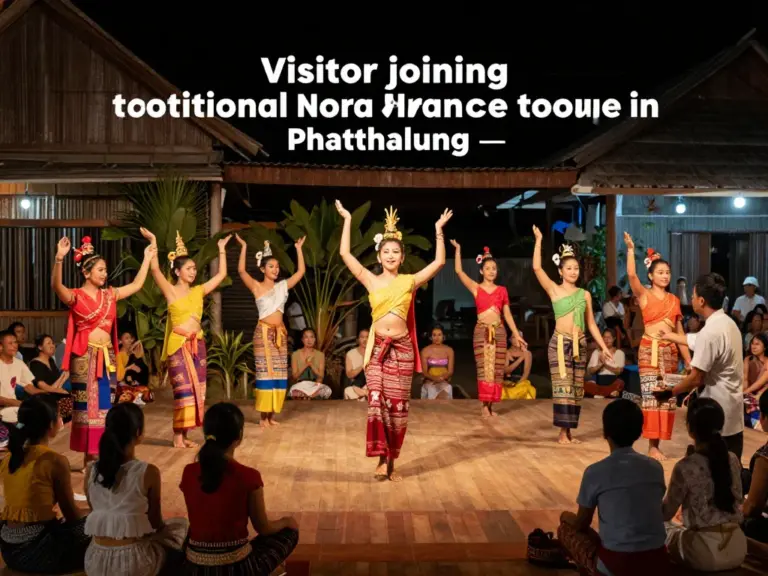
Intro to Nora dance in Phatthalung with a local troupe: A visitor’s guide to history, performance, and participating safely
Nora dance in Phatthalung is more than just a performance; it is a spiritual heartbeat that has pulsed through Southern Thailand for centuries. Recently recognized by UNESCO as an Intangible Cultural Heritage of Humanity, Nora (or Menora) combines acrobatics, intricate finger movements, and improvised storytelling. For the curious traveler, visiting a local troupe in Phatthalung offers an intimate window into a tradition that balances artistic beauty with profound spiritual beliefs.
The Deep Roots of Nora Dance in Phatthalung
Phatthalung is widely considered the ancestral home of Nora. Local legend traces the dance back to the shores of Songkhla Lake, where a princess was said to have taught the art form after being inspired by mystical visions. Unlike other classical Thai dances, Nora is characterized by high-energy movements, curved finger extensions (often enhanced by long metallic nails), and a distinct rhythmic accompaniment featuring drums, gongs, and the piercing melody of the ‘pi’ (oboe).
Experiencing a Local Troupe Performance
When you visit a local troupe in Phatthalung, you aren’t just watching a show; you are entering a community space. The costumes are breathtaking—beaded vibrant patterns, winged structures called ‘hang hong,’ and the iconic ‘soet’ (crown). A typical performance includes an opening ritual, a series of dance movements representing nature and mythology, and a comedic or dramatic skit where the lead performer interacts with the audience in the local Southern Thai dialect.
How to Participate Safely and Respectfully
Cultural tourism requires a balance of curiosity and respect. If you are invited to join a workshop or observe a rehearsal, keep these safety and etiquette tips in mind:
- Dress Modestly: When visiting troupe headquarters or temples where Nora is performed, ensure your shoulders and knees are covered.
- Mind the Sacred Space: The stage and the ‘soet’ (crown) are considered sacred. Never touch a dancer’s headgear or step onto the performance area without permission.
- Physical Limits: If you try the basic ‘Khaen On’ (arm flexibility) movements, go slow. The hyper-extension seen in professionals takes years of training from childhood.
- Photography: Always ask the troupe leader before taking photos, especially during ritualistic elements.
| Aspect | What to Expect |
|---|---|
| Music | Fast-paced, rhythmic, and live. |
| Costume | Hand-beaded, heavy, and symbolic. |
| Duration | Rituals can last days; tourist demos are 30-60 mins. |
| Language | Southern Thai (Diction is rhythmic and poetic). |
Where to Find Nora in Phatthalung
To see the most authentic Nora dance in Phatthalung, look toward the Khuan Khanun district or the area surrounding the Thale Noi wetlands. Many master performers (Khru Nora) maintain small schools at their homes. Local community centers and the Phatthalung Cultural Office can often provide schedules for upcoming temple festivals where Nora is a staple.
คำถามที่พ่อย (FAQ)
What is the best time of year to see Nora in Phatthalung?
While performances happen year-round, the ‘Nora Rong Khru’ ritual season typically falls between April and August. This is the most authentic time to witness the spiritual depth of the dance.
Can foreigners learn Nora dance?
Yes! Many local troupes are happy to teach basic hand gestures and steps to visitors. It is a wonderful way to support the local economy and preserve the culture.
Is Nora dance the same as Khon?
No. While both are traditional Thai dances, Khon is a masked court drama from Central Thailand, whereas Nora is a folk tradition from the South with a heavy emphasis on improvisation and spiritual rituals.
Is there an entrance fee to watch local troupes?
For temple festivals, it is usually free, but donations to the troupe or the temple are highly encouraged. Private demonstrations at a troupe’s home will usually involve a pre-arranged fee.
References
- UNESCO: Nora, Dance Drama in Southern Thailand
- Tourism Authority of Thailand Newsroom
- Ministry of Culture, Thailand
- What is Nora dance and why is Phatthalung a unique place to see authentic Nora performances?
- When and where to watch local Nora troupes in Phatthalung: festivals, community stages, and tourist-friendly shows
- What to expect during a Nora performance: costumes, music, choreography, and cultural meanings explained