Silk weaving and natural dye at Ban Tha Sawang Surin: A Complete Visitor’s Guide to Tradition, Techniques, and Cultural Experiences
- Silk weaving and natural dye at Ban Tha Sawang Surin: A Complete Visitor’s Guide to Tradition, Techniques, and Cultural Experiences
Deep in the heart of Northeastern Thailand, specifically in the Surin province, lies a village where time seems to move to the rhythmic click-clack of wooden looms. Ban Tha Sawang is not just a settlement; it is a living museum of Thai heritage. Known worldwide for its exquisite gold-brocade silk, this village represents the pinnacle of silk weaving and natural dye at Ban Tha Sawang Surin. For travelers seeking an authentic cultural immersion, this guide explores the intricate artistry and the soul of Thai craftsmanship.
The Heritage of Silk Weaving and Natural Dye at Ban Tha Sawang Surin
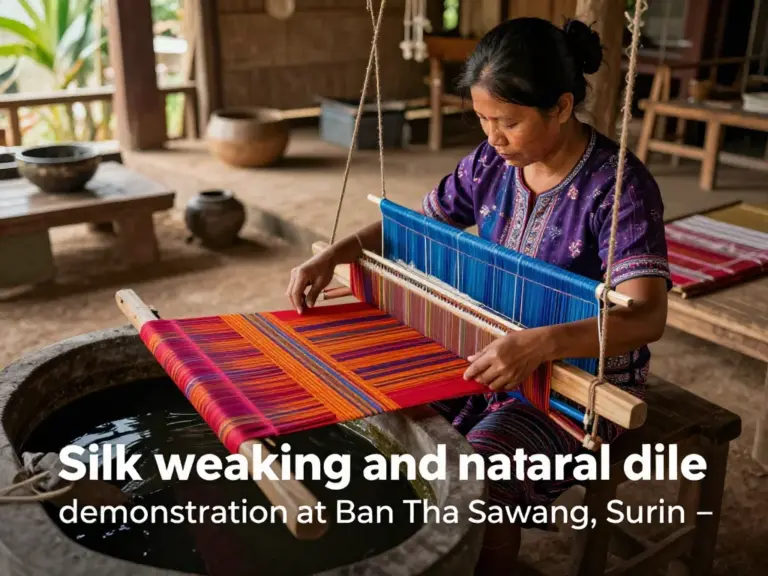
The reputation of Ban Tha Sawang stems from its commitment to preserving ancient techniques that have vanished elsewhere. The village specialized in ‘Yok Thong’ or gold-brocade silk, a process so complex that it requires a specialized loom and up to four weavers working in unison to produce just a few centimeters of fabric per day. The use of natural dyes is a cornerstone of this tradition, utilizing local plants, barks, and insects to create a vibrant yet earthy palette that synthetic alternatives simply cannot replicate.
The Alchemy of Natural Dyes
The process of silk weaving and natural dye at Ban Tha Sawang Surin begins long before the loom is touched. Artisans harvest raw materials from the surrounding Isan landscape. Indigo provides deep blues, lac (a resin secreted by insects) creates rich reds and pinks, and the bark of the jackfruit tree yields warm yellows. This eco-friendly approach ensures that every piece of silk is unique, reflecting the seasonal variations of the natural ingredients used in the dye vats.
The Intricate Weaving Process
Walking through the village, visitors can witness the ‘Chansoma’ weaving group. Here, the looms are often built into the ground to accommodate the thousands of heddles required for complex patterns. The precision required is staggering; a single mistake in the thread count can ruin weeks of work. This dedication to perfection is what makes Surin silk some of the most sought-after textile in the world.
Visitor Experiences: What to See and Do
A visit to Ban Tha Sawang is a multi-sensory experience. Beyond observing the weavers, visitors can engage in several cultural activities:
- Demonstration Centers: Watch the entire lifecycle of silk, from silkworm rearing to the final polishing of the cloth.
- Shopping for Authenticity: Purchase genuine silk scarves, sarongs, and decorative pieces directly from the artisans.
- Photography: Capture the stunning contrast of colorful silk drying against the rustic backdrop of traditional Thai wooden houses.
Sustainable Tourism and Supporting the Community
By visiting and purchasing products, travelers directly contribute to the preservation of these ancient skills. The silk weaving and natural dye at Ban Tha Sawang Surin serves as the primary economic driver for the village, ensuring that younger generations have an incentive to learn and maintain their ancestors’ craft in an increasingly modernized world.
คำถามที่พ่อยบ่อย (FAQ)
Explore common questions about visiting Ban Tha Sawang and its famous silk production.
What is the best time to visit Ban Tha Sawang?
The best time to visit is during the cool season (November to February) when the weather is pleasant for walking around the village. However, weaving occurs year-round.
Is there an entrance fee for the village?
No, there is generally no entrance fee to enter the village and observe the weaving, though donations to the local centers or purchasing local products are highly encouraged.
Can I try weaving myself?
Some demonstration centers allow visitors to try basic weaving on smaller looms, but the complex gold-brocade looms are reserved for master artisans.
How can I tell if the silk is genuinely naturally dyed?
Naturally dyed silk often has more subtle, earthy tones and may have slight irregularities in color, which adds to its charm. Sellers at Ban Tha Sawang are proud of their heritage and will gladly explain which plants were used for specific colors.
References
- Tourism Authority of Thailand (TAT)
- UNESCO Intangible Cultural Heritage Insights
- Sustainable Arts and Crafts Institute of Thailand (SACIT)
- Why Ban Tha Sawang’s silk weaving matters: history, cultural significance, and what makes Surin silk unique
- How natural dyeing works at Ban Tha Sawang: plant-based dyes, color extraction, and seasonal dye sources
- Hands-on experiences and workshops: what visitors can expect, booking tips, and ethical tourism practices