What respectful behaviors and rituals should you follow inside a temple (prostration, offering, noise, monk interactions)?
- What respectful behaviors and rituals should you follow inside a temple (prostration, offering, noise, monk interactions)?
Visiting a Wat (Thai Buddhist temple) is a profound experience, offering a glimpse into the heart of Thai culture and spirituality. However, these sacred spaces operate under strict, centuries-old codes of conduct. To ensure your visit is meaningful and honors the local traditions, understanding the respectful temple etiquette Thailand demands is crucial. This comprehensive guide covers everything from appropriate dress to the delicate art of interacting with monks, ensuring you navigate these spiritual sanctuaries with grace and reverence.
Dress Code: The First Step to Respect
The most immediate way to show respect is through your attire. Thailand is a warm country, but temple visits require modesty. Failure to adhere to the dress code can result in being denied entry to the main sanctuary (Ubosot or Bot).
Covering Shoulders and Knees
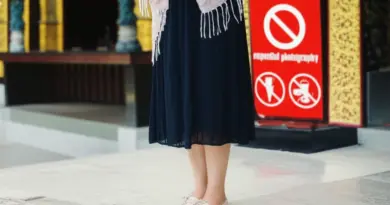
Both men and women must ensure their shoulders and knees are fully covered. This applies to tops, shirts, dresses, and trousers/skirts. Lightweight, loose-fitting clothing is ideal for comfort in the heat while meeting these requirements. Avoid tank tops, spaghetti straps, shorts, and miniskirts. If you forget, many major temples sell or rent inexpensive sarongs or shawls at the entrance.
Footwear Etiquette
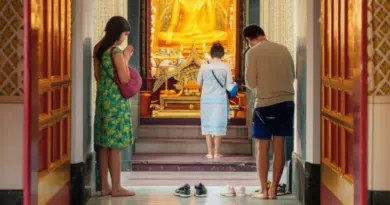
Shoes are considered unclean as they touch the ground, which is lower than the heads of Buddha images or monks. Therefore, you must always remove your shoes before entering any temple building, including the main hall, smaller shrines, and sometimes even before climbing the steps to the main platform.
Mastering Temple Entry and Spatial Awareness
Once dressed appropriately, spatial awareness becomes key. Thai Buddhist architecture dictates a hierarchy of sacredness, and you must move through the space accordingly.
Removing Shoes and Hats
Always remove hats, caps, and sunglasses before stepping onto temple grounds or into a building. When removing shoes, place them neatly to the side, out of the main thoroughfare. Never point the soles of your feet toward a Buddha image, a monk, or another person, as this is considered highly insulting.
Understanding the Layout (Bot vs. Viharn)
Temples often have two main assembly halls: the Ubosot (Bot), which is the ordination hall where monks gather, and the Viharn, which is the general assembly hall, often housing the main Buddha image. The Bot is the most sacred area; always observe the strictest silence and respect there. Pay attention to signs indicating which areas are restricted.
The Art of Prostration (Krap/Wai)
Prostration, or Krap, is the highest form of respect shown to the Buddha, Dharma, and Sangha (the Triple Gem). While tourists are not always expected to prostrate, understanding the ritual shows deep cultural appreciation.
When and How to Prostrate (The Three Times)
If you choose to prostrate before a principal Buddha image, the standard ritual involves three full prostrations:
- The first prostration is for the Buddha.
- The second prostration is for the Dharma (the teachings).
- The third prostration is for the Sangha (the monastic community).
To perform it correctly, kneel, place your palms together in the Anjali mudra (prayer position) above your head, and then lower your body until your forehead, both knees, and the tips of your fingers touch the floor simultaneously. Rise, touch your fingertips to your forehead again, and repeat twice more.
The Proper ‘Wai’ Gesture
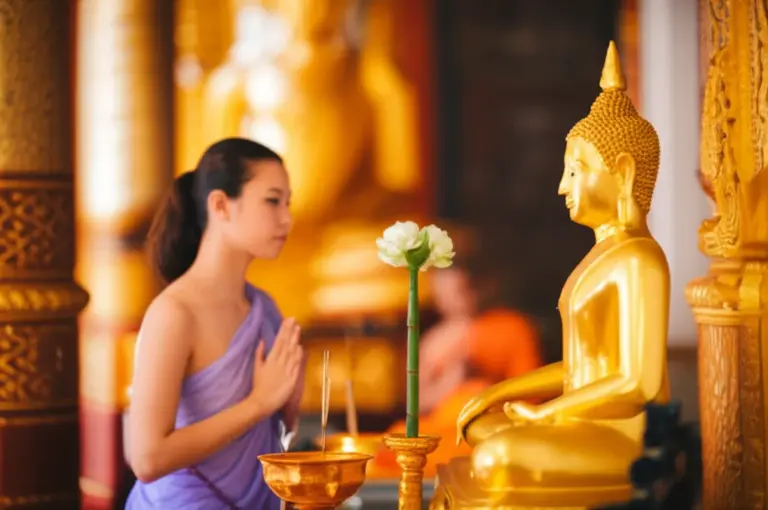
The Wai (placing hands together in prayer position) is the standard greeting. When using a Wai towards a Buddha image or a monk, the higher the hands are held, the more respect is shown. For a Buddha image, the fingertips should touch the bridge of the nose. For a monk, the fingertips should touch the eyebrow area.
Reverent Offerings and Donations
Offerings are a central part of temple worship. These acts are not transactions but expressions of generosity (dana).
Giving Alms to Monks
If you wish to give money or food directly to a monk, always present the item with both hands, accompanied by a slight bow or a low Wai. Never hand an offering directly into the monk’s hand; place it gently on a table or tray provided for this purpose. Remember, monks rely on the community for sustenance.
Offerings to Buddha Images (Incense, Candles, Flowers)
The standard triad of offerings are incense sticks, a candle, and a small bouquet of flowers (often lotus buds). Light them, place them in the designated holders, and then perform a simple Wai while reflecting on the Buddha’s teachings. Do not touch the Buddha image unless specifically invited or instructed to do so (such as placing gold leaf on specific statues).
Rules of Silence and Conduct
Temples are places of meditation and tranquility. Maintaining a quiet demeanor is perhaps the simplest yet most essential component of respectful temple etiquette Thailand visitors must observe.
Managing Noise Levels
Keep voices low, especially inside the main halls. Turn your mobile phone to silent or vibrate mode; taking calls inside the temple area is strictly forbidden. Avoid loud chatter, laughter, or pointing gestures.
Photography Guidelines
Photography is generally permitted in public areas, but always be discreet. Never take photos while monks are chanting or during a ceremony. Crucially, never pose for a selfie or a photo that involves turning your back directly to a Buddha image, as this is highly disrespectful.
Interacting Respectfully with Monks
Monks (Bhikkhus) are highly revered figures in Thai society. Interactions must be handled with extreme care, particularly regarding physical contact and proximity.
Physical Distance and Boundaries (Especially for Women)
A monk must never be touched by a woman. If a woman needs to pass something to a monk, she must place it on a table or pass it to a man who can then hand it to the monk. Women should always maintain a respectful distance, never sitting on a seat higher than a monk, and avoiding sitting directly next to them on benches or pews.
Receiving Blessings
If a monk offers a blessing (often involving sprinkling holy water or tying a white thread around your wrist), receive it quietly and humbly. A low Wai is appropriate acknowledgment. If a thread is tied, do not remove it until it naturally falls off; cutting it is considered bad luck.
Conclusion: Embracing Serenity
While these rules might seem extensive, they stem from a deep cultural commitment to respect and serenity. By observing proper respectful temple etiquette Thailand visitors will find their experiences far richer. Approach every Wat with an open heart, a modest appearance, and a quiet presence, and you will be welcomed into the spiritual tranquility that defines these magnificent sites.
| Action | Respect Level | Why? |
|---|---|---|
| Remove Shoes | Mandatory | Feet are considered low/unclean. |
| Cover Knees/Shoulders | Mandatory | Showing respect to the sacred space. |
| Pointing Feet at Buddha | Highly Offensive | The head is the highest point of respect. |
| Passing items to Monks (Women) | Critical Boundary | Avoid physical contact between women and monks. |
คำถามที่พบบ่อย (FAQ)
Do I need to know Thai phrases for temple visits?
While knowing ‘Sawadee krap/ka’ (hello/goodbye) and ‘Kop khun krap/ka’ (thank you) is appreciated, it is not mandatory. Politeness through non-verbal actions (Wai, dressing appropriately) carries more weight than spoken language in a temple setting.
Is it okay to sit on the floor in the main hall?
Yes, sitting on the floor is standard practice. However, ensure your feet are tucked beneath you or to the side (never pointing toward the Buddha image). If benches are provided, use them, but sit respectfully, avoiding stretching your legs out fully.
Can I bring food offerings that are not vegetarian?
While monks can technically accept all types of food, vegetarian or fruit offerings are often preferred, especially if you are unsure of the temple’s specific customs. Generally, avoid alcohol or strong-smelling items.
What if I accidentally break a rule?
If you realize you have made a mistake (e.g., pointed your foot briefly), do not panic. Simply stop the action, offer a sincere Wai, and try to correct the behavior immediately. Thais are generally understanding of foreign tourists trying their best.
References
For further reading on cultural immersion and respect in Thailand, consult resources detailing Theravada Buddhist traditions and Thai social norms.