Visiting Thai temples: Essential etiquette for respectful and safe visits (what tourists must know)
- Visiting Thai temples: Essential etiquette for respectful and safe visits (what tourists must know)
- Mastering the Dress Code: Covering Up for Respect
- Behavior Inside the Viharn (Wihan) and Ubosot
- Interacting with Monks: A Crucial Aspect of Thai Temple Etiquette
- Photography and Sacred Artifacts: Capture Memories Responsibly
- Safety Considerations at Major Wats
- Essential Thai Temple Etiquette: Quick Checklist
- คำถามที่พบบ่อย (FAQ)
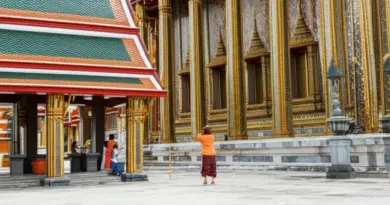
Thailand, the Land of Smiles, is dotted with thousands of magnificent temples, known locally as ‘Wats.’ From the glittering spires of Bangkok’s Grand Palace to the serene quiet of Chiang Mai’s mountaintop sanctuaries, visiting these sites offers a profound glimpse into Thai culture and Buddhism. However, as a visitor, you bear the responsibility of upholding local customs. Failing to observe proper protocol can cause offense, disrupt worshippers, or, in rare cases, lead to being denied entry. This comprehensive guide breaks down everything you need to know to ensure your temple visits are both respectful and safe.
Mastering the Dress Code: Covering Up for Respect
The most immediate requirement when entering any Thai temple is adherence to a strict dress code. This is non-negotiable, especially at major royal or highly sacred Wats. Think of it as showing reverence to the presence of the Buddha image and the sanctity of the space.
The Golden Rule: Shoulders and Knees
Both men and women must ensure their shoulders and knees are fully covered. This applies to entry into the main ordination hall (Ubosot) and assembly halls (Viharn).
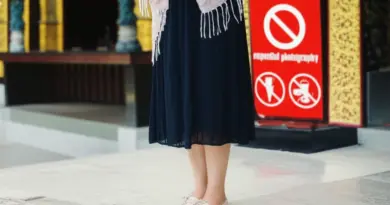
- For Upper Body: T-shirts with sleeves are generally acceptable, but tank tops, spaghetti straps, halter tops, and revealing blouses are forbidden. A light scarf or shawl can be used to cover bare shoulders if necessary.
- For Lower Body: Shorts, short skirts, capris, and ripped jeans are not allowed. Long trousers or skirts that reach the ankle or mid-calf are required.
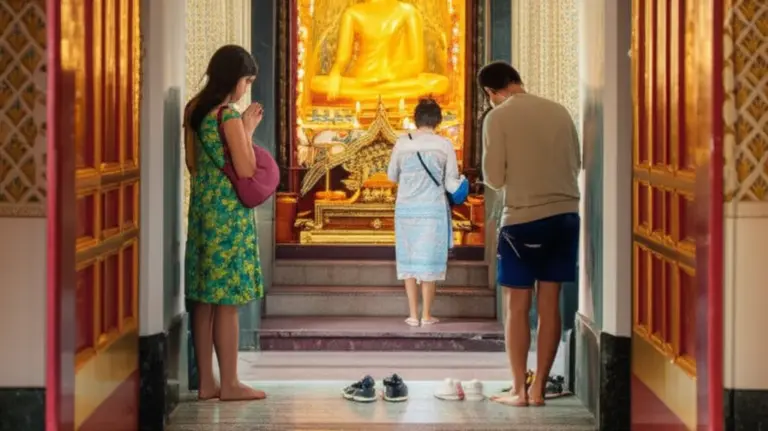
- Footwear: Always remove your shoes before stepping onto the raised platforms or entering the main prayer halls. This applies to socks as well in some very traditional areas, though usually, socks are fine if shoes are off.
Footwear Protocol: Leaving the Outside World Behind
In Thai culture, the feet are considered the lowest and least clean part of the body. Therefore, removing footwear before entering any sacred building is a fundamental act of respect. Look for shoe racks or designated areas outside the entrance. Never step on the threshold (the raised lip at the doorway), as this is considered particularly insulting.
Behavior Inside the Viharn (Wihan) and Ubosot
Once inside the main halls, your behavior must shift to a quiet, contemplative mode. These spaces house the principal Buddha images and are used for meditation and ceremonies.
Posture and Positioning: Facing the Buddha Image
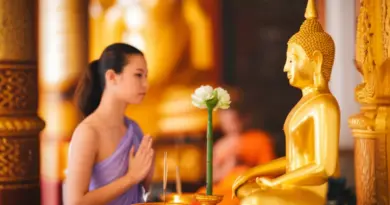
When sitting or kneeling in front of a Buddha image, never point your feet directly at it. This is extremely disrespectful, as feet are considered lowly. The proper way to sit is either cross-legged (if comfortable) or kneeling with your feet tucked beneath you (known as the ‘mermaid’ position for women, or sitting back on your heels for men).
Silence and Reverence: Managing Noise Levels
Keep voices low. This is not a marketplace. Loud conversations, phone calls, or laughing boisterously are highly inappropriate. If you must use your phone, switch it to silent mode immediately upon entering the temple grounds. For a deeper understanding of the atmosphere, we highly recommend viewing this guide on temple conduct:
Interacting with Monks: A Crucial Aspect of Thai Temple Etiquette
Monks (Bhikkhus) hold the highest social and religious standing in Thai society. Interactions must be handled with utmost care, particularly concerning gender separation.
Rules for Female Visitors: Maintaining Distance
This is one of the most important rules regarding essential Thai temple etiquette for women: A laywoman must never touch a monk, hand an item directly to him, or pass an item over his head. If you need to give an offering or receive something, place the item on a cloth or table between you, or have a male facilitate the exchange.
Offering Respect: The Wai and Bows
When greeting a monk, the traditional Thai gesture, the ‘Wai’ (palms pressed together), is appropriate. If you are greeting a senior monk, your fingertips should reach your nose, and you should bow slightly. If you are greeting a highly revered monk, you may need to perform the ‘Krap’ (prostration), though this is usually reserved for locals.
Photography and Sacred Artifacts: Capture Memories Responsibly
Photography is generally permitted in the outer temple grounds and sometimes within the Viharn, but always look for signage. Never take photos that could be construed as disrespectful or inappropriate.
| Photography Rules | What to Avoid |
|---|---|
| Ask permission before photographing monks. | Never pose with your back to a Buddha image, even if you are just taking a selfie. |
| Keep flashes off inside dark halls. | Do not climb on statues or sacred structures for a better view. |
Safety Considerations at Major Wats
While temples are generally safe, large tourist hubs like Wat Arun or Wat Pho can attract opportunistic petty thieves. Be mindful of your belongings, especially when you are removing your shoes or focusing on prayer. Furthermore, be wary of unofficial ‘guides’ near major attractions offering to take you to specific temples for a fee; these often lead to forced shopping stops.
Essential Thai Temple Etiquette: Quick Checklist
To summarize the key takeaways regarding essential Thai temple etiquette, use this final checklist before stepping onto temple grounds:
- Cover shoulders and knees (bring a shawl or sarong).
- Remove hats and shoes before entering buildings.
- Keep your voice low and put phones on silent.
- Never point your feet at a Buddha image or monk.
- Women: Do not touch or hand items directly to monks.
- Do not stand over a monk or Buddha image when taking photos.
คำถามที่พบบ่อย (FAQ)
Here are answers to common questions about visiting Thai Wats.
References
For further reading on Thai cultural norms and religious site visitation:
Thank you for visiting respectfully.
- What are Thai temples like and why is proper etiquette important for visitors?
- How should you dress and prepare before entering a temple (clothing, footwear, photography rules)?
- What respectful behaviors and rituals should you follow inside a temple (prostration, offering, noise, monk interactions)?