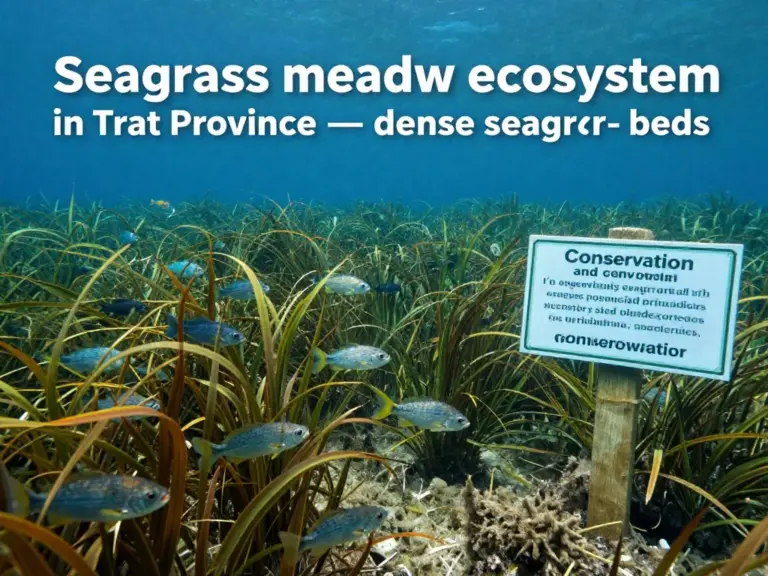
Why Seagrass Meadows Matter — ecosystem services, species to spot (sea grasses, fish, invertebrates), and conservation importance in Trat Province
- Why Seagrass Meadows Matter — ecosystem services, species to spot (sea grasses, fish, invertebrates), and conservation importance in Trat Province
When we think of Thailand’s coastal beauty, white sandy beaches and vibrant coral reefs often come to mind. However, tucked away in the shallow coastal waters of Trat Province lies a hidden powerhouse of biodiversity: Seagrass Meadows. These underwater prairies are not just grass; they are complex ecosystems providing vital services to our planet. For travelers visiting Trat, understanding these meadows adds a profound layer of appreciation to the natural landscape.
The Vital Ecosystem Services of Seagrass Meadows
Seagrasses are often called the ‘lungs of the sea.’ Despite covering less than 0.2% of the ocean floor, they are responsible for about 10% of the ocean’s carbon burial. In Trat Province, these meadows act as a massive carbon sink, helping to mitigate the effects of climate change. Furthermore, they serve as a natural filtration system, trapping sediment and absorbing excess nutrients from land runoff, which ensures the surrounding waters remain crystal clear for nearby coral reefs.
Species to Spot: A Biodiversity Hotspot in Trat
Trat’s coastal waters, particularly around Koh Chang and the mainland’s estuaries, are home to diverse flora and fauna. If you are snorkeling or taking a guided eco-tour, keep an eye out for these fascinating residents:
1. The Seagrasses Themselves
You will find several species here, including Enhalus acoroides (Tape Grass) with its long, ribbon-like leaves, and Halophila ovalis (Spoon Grass), which looks like tiny green paddles on the seafloor. These plants provide the structural foundation for the entire community.
2. Marine Invertebrates
- Sea Stars: Often found resting among the blades, scavenging for food.
- Ornamental Shrimps: Master of camouflage, these tiny creatures hide within the grass to avoid predators.
- Sea Cucumbers: Essential for nutrient cycling, they are frequently seen in the sandy patches between grass beds.
3. Fish and the Iconic Dugong
Seagrass meadows are critical nurseries for many fish species, including snappers and groupers. Most importantly, these meadows are the primary feeding grounds for the Dugong (Sea Cow). While sightings in Trat are rarer than in Trang, the presence of healthy seagrass is the only way to ensure these gentle giants return to these waters.
Conservation Importance in Trat Province
Trat Province faces unique challenges, including coastal development and runoff from agriculture. Conservation efforts here are focused on community-based management. Local fishermen have realized that healthy seagrass means more fish for their nets, leading to the establishment of protected zones. By visiting as a responsible tourist, you support the local economy that values preservation over exploitation.
| Benefit | Description |
|---|---|
| Coastal Protection | Reduces wave energy and prevents shore erosion. |
| Water Quality | Filters pollutants and maintains clarity. |
| Livelihoods | Supports local fisheries and eco-tourism. |
คำถามที่พบบ่อย (FAQ)
What is the best time to see seagrass in Trat?
The best time is during the dry season, from November to April, when the water visibility is at its peak and the weather is calm.
Can I walk on the seagrass?
No, you should avoid walking on seagrass as it can damage the delicate root systems and disturb the organisms living within the sediment.
Are there Dugongs in Trat?
While sightings are less frequent than in Southern Thailand, historical records and occasional sightings confirm their presence, highlighting the need for meadow protection.
How can tourists help conserve seagrass?
Tourists can help by using reef-safe sunscreen, avoiding littering, and choosing eco-certified tour operators who respect marine boundaries.
References
- UN Environment Programme – Seagrass: The Ocean’s Forgotten Ecosystem
- IUCN – Seagrasses and Climate Change
- Department of Marine and Coastal Resources (DMCR) Thailand
- Seagrass Meadow Walk at Laem Ngop: A Guided Marine-Biology Experience for Eco-Tourists and Families
- What to Expect on a Seagrass Meadow Walk at Laem Ngop — timing, meeting points, gear, accessibility, and safety guidelines for visitors
- Guided Tour Structure and Learning Opportunities — how marine biologists lead walks, typical teaching points, interactive activities, and citizen-science options