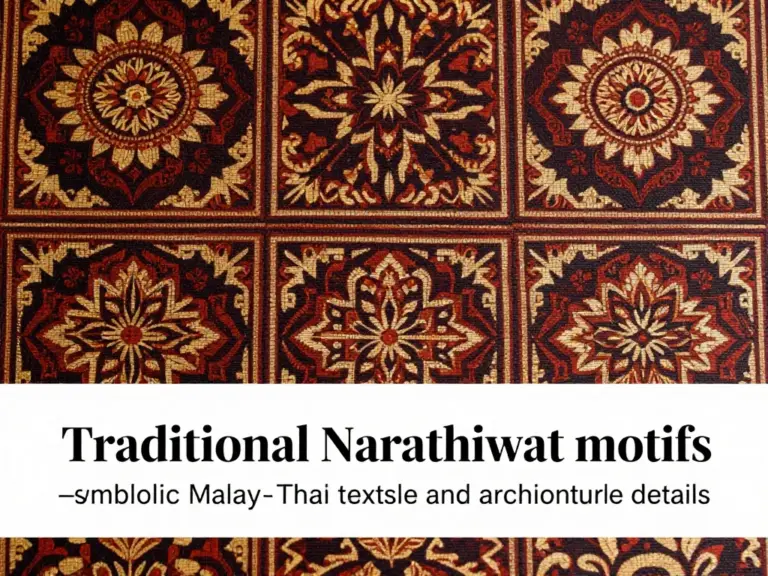
What traditional Narathiwat motifs you’ll learn — meanings, common patterns, and how to recognize authentic designs
- What traditional Narathiwat motifs you’ll learn — meanings, common patterns, and how to recognize authentic designs
Narathiwat, a province nestled in the deep south of Thailand, is a treasure trove of cultural heritage where Malay, Thai, and Islamic influences converge. One of the most vibrant expressions of this unique identity is found in its traditional motifs. Whether etched into the wood of a Kolek boat or hand-drawn onto fine silk batik, these traditional Narathiwat motifs tell stories of faith, nature, and community history. For the discerning traveler or art enthusiast, understanding these patterns is the key to appreciating the profound craftsmanship of the region.
The Heart of the Craft: Common Traditional Narathiwat Motifs
When exploring Narathiwat, you will primarily encounter motifs in two mediums: Batik textiles and Kolek boat carvings. The most iconic pattern is the Bunga Raya (Hibiscus), the queen of tropical flowers. In local culture, the hibiscus represents elegance and the fleeting beauty of life. Another frequent sight is the Daun Keladi (Caladium leaf), which symbolizes resilience and growth within the swampy landscapes of the south.
Geometric patterns also play a significant role, particularly in Islamic-influenced art. You will see the Pucuk Rebung (Bamboo Shoot), a triangular motif found on the borders of sarongs. This pattern is not just decorative; it signifies the hope for continuous improvement and the strength of the community. In the context of traditional Narathiwat motifs, these shapes are often layered with intricate ‘S’ curves known as Awan Larat (meandering clouds), which give the designs a sense of fluid motion.
Meanings and Symbolism Behind the Patterns
Every line in a Narathiwat design serves a purpose. The Kolek Boat Motifs, for instance, are a masterclass in symbolism. These boats are painted with mythical creatures like the Gajah Mina (an elephant-headed fish) or the Garuda. These motifs are believed to protect fishermen from the spirits of the sea and ensure a bountiful catch. The vibrant colors—reds, yellows, and greens—represent courage, royalty, and nature, respectively.
| Motif Name | Visual Elements | Symbolic Meaning |
|---|---|---|
| Bunga Raya | Five-petaled Hibiscus | National pride and delicate beauty |
| Pucuk Rebung | Triangular bamboo shoots | Growth, resilience, and prosperity |
| Awan Larat | Flowing, vine-like scrolls | The interconnectedness of life |
| Gajah Mina | Hybrid elephant-fish | Protection and strength at sea |
How to Recognize Authentic Narathiwat Designs
Distinguishing authentic traditional Narathiwat motifs from mass-produced imitations requires a keen eye. Authentic Narathiwat Batik is usually created using the Canting (wax-drawing) method or hand-carved copper blocks. Look for slight irregularities in the lines; these are the hallmarks of human touch. The colors in authentic pieces often have a depth that digital printing cannot replicate, as artisans use a layering process to achieve specific shades.
For woodwork and Kolek boats, authenticity is found in the depth of the carving. Traditional Narathiwat motifs are carved with a technique that creates high relief, making the patterns pop against the wood. The paint used is historically oil-based and weather-resistant, designed to withstand the harsh salt air of the Gulf of Thailand. When purchasing souvenirs, look for certifications from local craft cooperatives in districts like Bacho or Tak Bai.
Preserving the Legacy: Where to See These Motifs Today
To truly immerse yourself in traditional Narathiwat motifs, a visit to the Ban Thon Village is essential. This seaside community is famous for both its Kolek boat building and its exquisite Batik production. Here, you can watch artisans meticulously apply wax to fabric or chisel intricate designs into wooden hulls. It is a living museum where the motifs of the past are kept alive by the younger generation.
คำถามที่พบบ่อย (FAQ)
What is the most famous motif in Narathiwat?
The most famous motif is the Bunga Raya (Hibiscus), often found in Batik designs, representing beauty and the local flora of Southern Thailand.
How can I tell if Batik is handmade?
Handmade Batik will have the design visible on both sides of the fabric, and you will notice small imperfections or variations in the pattern that indicate it was hand-drawn with wax.
Why are the boats in Narathiwat so colorful?
The Kolek boats are brightly colored to represent the spirit of the fishermen and to incorporate protective motifs that combine Malay, Thai, and Hindu influences.
Where is the best place to buy authentic Narathiwat crafts?
Ban Thon Village in Narathiwat is the premier destination for purchasing authentic hand-painted Batik and miniature Kolek boats directly from the artisans.
References
- Deep South Batik Class in Narathiwat: Learn Traditional Motifs and Wax Techniques from Local Masters
- What is Deep South batik and why Narathiwat is its cultural heart — history, significance, and search intent behind this class
- What wax-resist techniques taught in the class — step-by-step methods (canting, block printing, layering) and beginner tips