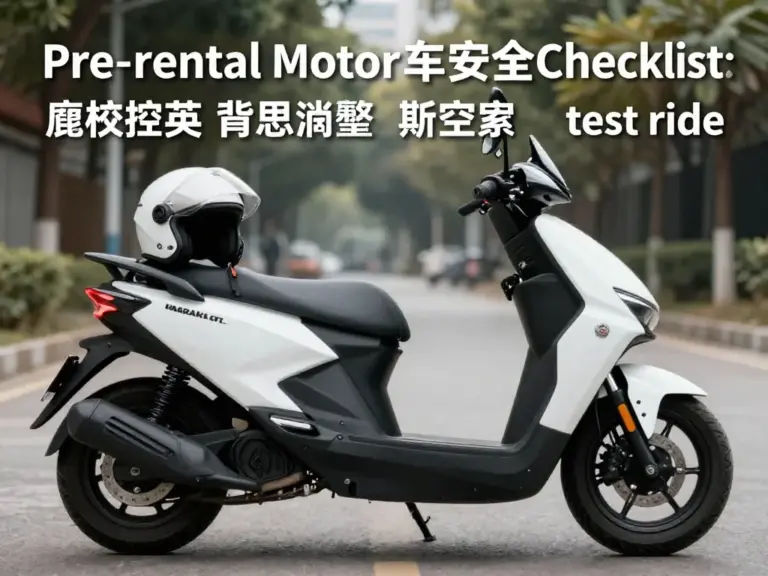
Pre-rental safety checklist: bike inspection, helmet quality, insurance, and test-ride best practices
- Pre-rental safety checklist: bike inspection, helmet quality, insurance, and test-ride best practices
Exploring the lush landscapes of Thailand on two wheels is a dream for many travelers. Whether it is navigating the winding roads of Mae Hong Son or cruising the coastal paths of Phuket, a motorbike offers unparalleled freedom. However, road safety in Thailand requires a proactive approach. Before you sign that rental agreement and head out into the traffic, performing a thorough pre-rental safety checklist is your first and most important line of defense against accidents and mechanical failures.
1. The Core Pre-rental Safety Checklist: Mechanical Inspection
The mechanical integrity of your rental bike is non-negotiable. Don’t assume that because a bike looks new, it is in perfect working order. Start with a visual walk-around. Look for signs of oil leaks under the engine and check the overall condition of the bodywork. If you see scratches or dents, take photos immediately to avoid being charged for pre-existing damage.
- Tires: Check the tread depth. Balding tires are extremely dangerous on Thailand’s occasionally slick or sandy roads. Ensure they are properly inflated.
- Brakes: Squeeze the brake levers. They should feel firm, not spongy. Test both the front and rear brakes independently.
- Lights & Signals: Turn on the ignition. Verify that the headlight (high and low beam), brake lights, and all four turn signals are functioning correctly.
- Fluid Levels: Ask the vendor to show you the oil and coolant levels (if applicable).
2. Evaluating Helmet Quality and Safety Standards
In Thailand, the law requires both the driver and passenger to wear a helmet. However, not all helmets are created equal. Many rental shops provide “half-shell” helmets that offer minimal protection. When following your pre-rental safety checklist, prioritize finding a shop that offers full-face or modular helmets with recognized safety certifications like DOT (USA) or ECE 22.05/22.06 (Europe).
| Feature | What to Look For |
|---|---|
| Fit | Should be snug; it shouldn’t rotate when you shake your head. |
| Visor | Must be clear, free of deep scratches, and able to stay open/closed. |
| Strap | The buckle must click securely and the strap should not be frayed. |
| Internal Padding | Should be firm and not crumbling or smelling of heavy mildew. |
3. Understanding Rental Insurance and Liability
Insurance is often the most misunderstood part of the rental process in Thailand. Most basic rentals only include “Por Ror Bor,” which is the mandatory government insurance. This only covers basic medical expenses for third parties and has very low limits. It does not cover damage to the bike or your own medical bills. Ask the rental shop if they offer “First Class” or supplemental insurance that covers theft and damage. Furthermore, check your personal travel insurance policy; many exclude accidents involving motorcycles unless you hold a specific license.
4. Test-Ride Best Practices: The Final Verification
Before you pay and leave, a short test ride is essential. A bike may look fine but handle poorly. Ride the bike in a quiet area near the shop to get a feel for its mechanics. Pay attention to the following:
- Throttle Response: Does the bike accelerate smoothly or does it stutter?
- Handling: Does the bike pull to one side when you loosen your grip slightly? This could indicate a bent frame or fork.
- Suspension: Does the bike bounce excessively over small bumps?
- Strange Noises: Listen for grinding, squealing, or rattling sounds from the engine or chain.
คำถามที่พบบ่อย (FAQ)
References
- Tourism Authority of Thailand (TAT) Newsroom
- World Health Organization – Road Safety in Thailand
- Department of Land Transport Thailand