Thailand’s Festivals and Events: The Ultimate Calendar of Unforgettable Cultural Celebrations
- Thailand’s Festivals and Events: The Ultimate Calendar of Unforgettable Cultural Celebrations
- A Glimpse into Thailand’s Vibrant Festival Calendar
- January – March: Kicking Off the Year with Joy
- April – June: The Wet and Wild Celebrations
- July – September: Spiritual Gatherings and Artistic Displays
- October – December: Lights, Lanterns, and Loyalties
- Experiencing Thai Festivals: Tips for Travelers
- คำถามที่พบบ่อย (FAQ)
- What are the most famous festivals in Thailand?
- When is the best time to visit Thailand for festivals?
- Are Thai festivals suitable for families with children?
- What should I wear during Thai festivals?
Thailand, the ‘Land of Smiles,’ is renowned for its captivating landscapes, delicious cuisine, and, perhaps most notably, its vibrant cultural tapestry woven with a myriad of festivals and events. For anyone interested in Thailand’s Festivals and Events, experiencing these celebrations firsthand offers an unparalleled immersion into the heart and soul of Thai traditions. From ancient rituals to joyous modern spectacles, the country’s calendar is brimming with unforgettable cultural celebrations that promise to enchant every traveler. This ultimate guide will walk you through the annual highlights, ensuring you don’t miss a beat of Thailand’s festive spirit.
A Glimpse into Thailand’s Vibrant Festival Calendar
Thailand’s festivals are deeply rooted in Buddhist, Hindu, and animist beliefs, often reflecting the agricultural cycles, lunar calendar, and historical events. These aren’t just holidays; they are profound expressions of community, reverence, and joy. Whether it’s a nationwide water fight or a serene lantern release, each event tells a story of Thai heritage and hospitality. Understanding the rhythm of these celebrations is key to planning your visit and truly embracing the local culture. The diversity of Thailand’s Festivals and Events ensures there’s always something spectacular happening, no matter when you visit.
January – March: Kicking Off the Year with Joy
Chinese New Year (Late January/Early February)
While not a traditional Thai festival, Chinese New Year is widely celebrated, particularly in areas with significant Chinese populations like Bangkok’s Yaowarat (Chinatown) and Phuket. Streets burst with red lanterns, dragon dances, and bustling markets offering traditional foods. It’s a vibrant spectacle of firecrackers, parades, and family gatherings.
Makha Bucha (February/March)
A significant Buddhist holiday, Makha Bucha commemorates the day 1,250 of the Buddha’s disciples spontaneously gathered to hear his sermon. Temples across the country hold candlelit processions (wian tian) where devotees walk three times around the main chapel, holding flowers, incense, and candles. It’s a deeply spiritual and serene experience.
Chiang Mai Flower Festival (First Weekend of February)
Chiang Mai comes alive with a riot of colors during its annual Flower Festival. Elaborate floral floats, traditional dances, and a beauty pageant transform the city into a fragrant wonderland. It’s a photographer’s dream and a perfect way to experience northern Thai charm.
April – June: The Wet and Wild Celebrations
Songkran (Thai New Year) (April 13-15)
The most famous of Thailand’s Festivals and Events, Songkran is the traditional Thai New Year, celebrated with the world’s largest water fight. While it’s a joyous and playful affair, its origins are in purification and washing away bad luck. Major cities like Bangkok, Chiang Mai, and Phuket become epicenters of water-splashing fun. Be prepared to get soaked and embrace the festive chaos!
Rocket Festival (Bun Bang Fai) (May)
Predominantly celebrated in the northeastern Isaan region, the Rocket Festival is an ancient fertility rite where villagers launch homemade rockets into the sky to encourage rainfall for the upcoming rice growing season. It’s a boisterous event with parades, folk music, and fierce competition for the highest-flying rocket.
Phi Ta Khon (Ghost Festival) (June/July)
This unique festival in Dan Sai, Loei Province, combines animist beliefs with Buddhist traditions. Participants wear elaborate, colorful ghost masks with phallic noses and engage in playful, boisterous processions. It’s a truly bizarre and unforgettable cultural experience.
July – September: Spiritual Gatherings and Artistic Displays
Asalha Bucha and Khao Phansa (July)
Asalha Bucha marks the Buddha’s first sermon, while Khao Phansa signifies the beginning of the three-month Buddhist Lent, a period when monks retreat to temples. These are solemn, reflective holidays often observed with merit-making at temples and candlelit processions. The Ubon Ratchathani Candle Festival, held during Khao Phansa, is particularly spectacular, featuring colossal wax sculptures paraded through the streets.
Phuket Vegetarian Festival (September/October)
For those seeking a truly unique, albeit intense, cultural experience, the Phuket Vegetarian Festival is a must-see. Rooted in Chinese traditions, participants engage in extreme acts of self-mutilation, such as body piercing and fire walking, to invoke the gods and cleanse the community. It’s a powerful display of devotion and resilience.
October – December: Lights, Lanterns, and Loyalties
Loy Krathong (November)
Often considered the most beautiful of Thailand’s Festivals and Events, Loy Krathong sees Thais release small, decorated floats (krathongs) made of banana leaves, flowers, candles, and incense onto rivers and canals. This act symbolizes letting go of grudges and bad luck. The sight of thousands of flickering lights drifting across the water under a full moon is truly magical. Sukhothai and Chiang Mai are particularly famous for their celebrations.
Yi Peng (Lantern Festival) (November)
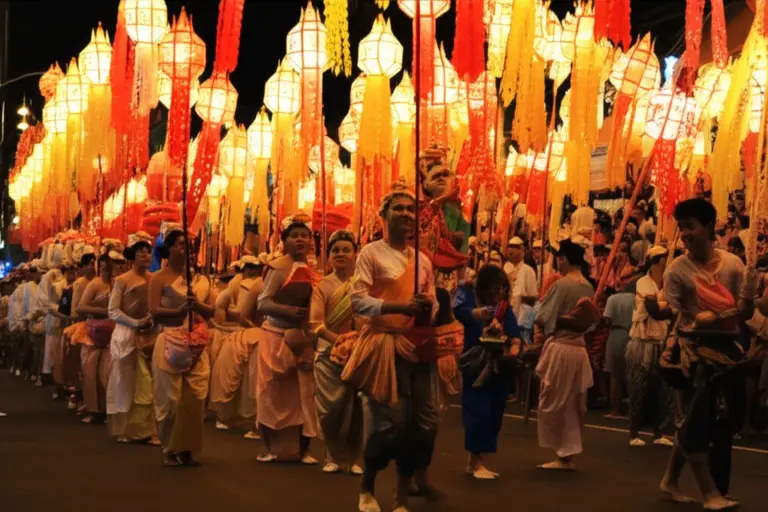
Coinciding with Loy Krathong in northern Thailand, especially Chiang Mai, Yi Peng is the ethereal Lantern Festival. Thousands of sky lanterns (khom loi) are released into the night sky, creating a breathtaking spectacle. The collective release of lanterns, symbolizing wishes and good fortune, is an incredibly moving experience.
King Bhumibol Adulyadej’s Birthday / Father’s Day (December 5th)
A deeply revered national holiday, December 5th marks the birthday of the late King Bhumibol Adulyadej, who was considered the Father of the Nation. The day is celebrated with reverence and respect, with public buildings adorned with lights and portraits of the King. It’s a day for Thais to honor their beloved monarch and for families to celebrate their fathers.
Experiencing Thai Festivals: Tips for Travelers
Plan Ahead
Many festivals, especially Songkran and Loy Krathong/Yi Peng, are incredibly popular. Book flights and accommodation well in advance, sometimes up to a year, especially if you plan to visit major festival hubs.
Respect Local Customs
While many festivals are joyous, remember their cultural and religious significance. Dress respectfully when visiting temples, ask permission before taking photos of locals, and always be mindful of your behavior, especially during solemn events.
Stay Hydrated and Protected
Thailand’s climate can be hot and humid. During outdoor festivals, stay hydrated, wear sunscreen, and protect your electronics from water during Songkran.
Experiencing Thailand’s Festivals and Events is more than just sightseeing; it’s about connecting with a rich, ancient culture that celebrates life, spirituality, and community with unparalleled enthusiasm. Each festival offers a unique window into the Thai way of life, promising memories that will last a lifetime. So, pack your bags, prepare for an adventure, and let the unforgettable cultural celebrations of Thailand sweep you off your feet!
คำถามที่พบบ่อย (FAQ)
References
- Overview of Thailand’s Major Festivals by Season and Region — What to Expect, Best Times to Visit, and Key Cultural Significance for Travelers and Locals
- Songkran, Loy Krathong, and Other Highlight Events — Traditions, Rituals, Safety Tips, and How to Experience Them Authentically
- Regional and Niche Celebrations Worth Travel Planning — Loi Prathip, Phi Ta Khon, Bun Bang Fai, and Local Long-tail Festival Searches for Trip Itineraries