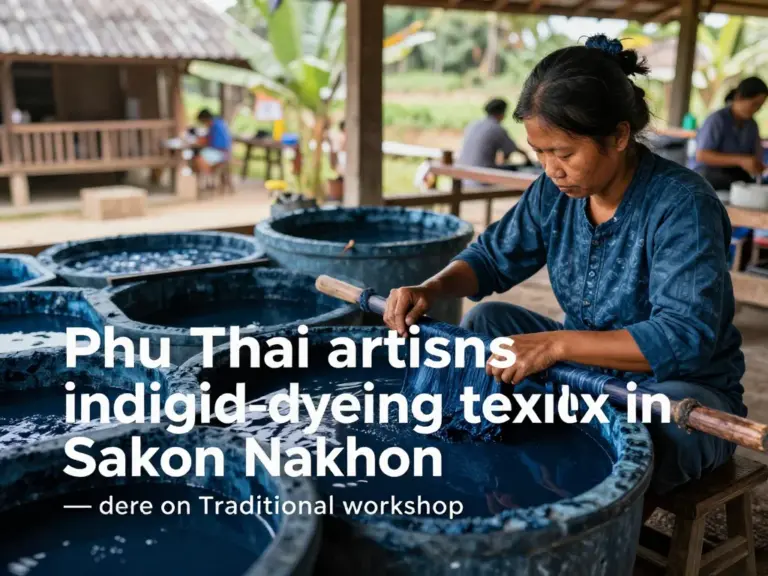
Indigo dyeing with Phu Thai artisans in Sakon Nakhon: A hands-on cultural experience and sustainable textile tradition
Deep in the heart of Northeast Thailand lies Sakon Nakhon, a province where the rhythm of life is dictated by the seasons and the slow, rhythmic dip of fabric into deep blue vats. Indigo dyeing with Phu Thai artisans in Sakon Nakhon is not merely a craft; it is a living heritage that bridges the gap between ancient wisdom and modern sustainability. For travelers seeking an authentic connection to Thai culture, this hands-on experience offers a profound look into the artistry of the Phu Thai people.
The Living Heritage of the Phu Thai People
The Phu Thai ethnic group, known for their vibrant traditions and exquisite weaving, have called Sakon Nakhon home for generations. Their expertise in natural indigo dyeing, or ‘Kram,’ is world-renowned. Unlike synthetic dyes, the indigo process here is entirely organic, utilizing the Indigofera tinctoria plant. This commitment to nature makes Sakon Nakhon a hub for sustainable textile tradition, attracting fashion enthusiasts and eco-conscious travelers alike.
The Alchemy of the Indigo Vat
The secret to the perfect shade of blue lies in the ‘living’ vat. Indigo dyeing with Phu Thai artisans in Sakon Nakhon involves maintaining a fermentation crock that requires daily care. Artisans ‘feed’ the vat with local ingredients like lime, ash water, and fermented fruit to keep the bacteria healthy. It is a delicate balance of chemistry and intuition passed down through maternal lines.
A Hands-On Cultural Experience
Visitors to Sakon Nakhon can participate in workshops where they learn the entire process. From harvesting the indigo leaves to mastering the ‘Mudmee’ (Ikat) tie-dye technique, the experience is immersive. You will feel the texture of hand-spun cotton and watch as the fabric emerges from the vat—initially green, then miraculously turning into a deep, celestial blue as it oxidizes in the air.
| Step | Description |
|---|---|
| Harvesting | Collecting fresh Indigofera leaves at dawn. |
| Fermentation | Soaking leaves to extract the blue pigment. |
| Dyeing | The rhythmic dipping of fabric into the fermented vat. |
| Oxidation | Watching the color change from green to blue in the air. |
Sustainability and Ethical Fashion
In an era of fast fashion, the sustainable textile tradition of the Phu Thai artisans stands as a beacon of hope. Every piece of clothing is biodegradable, non-toxic, and supports the local economy. By choosing to visit and learn from these communities, travelers contribute directly to the preservation of this intangible cultural heritage. The use of natural mordants and rainwater makes this one of the most eco-friendly dyeing processes on the planet.
คำถามที่พบบ่อย (FAQ)
What is the best time to visit Sakon Nakhon for indigo dyeing?
While available year-round, the best time is during the cooler months (November to February) or during the local festivals where textile displays are at their peak.
Can beginners join the workshops?
Yes! Most artisan villages like Ban Tham Tao or Ban Pa Na offer workshops tailored for beginners, including children.
Is the indigo dye permanent?
Natural indigo is very durable. While it may bleed slightly during the first wash, the color remains vibrant for years if cared for properly with cold water and mild soap.
References
- Why Phu Thai indigo dyeing in Sakon Nakhon matters: history, cultural significance, and traditional techniques
- Where to go and who to visit: top Phu Thai villages, artisan cooperatives, and ethical tour operators for authentic indigo workshops
- What to expect in a workshop: step-by-step indigo dyeing process, materials, seasonal timing, and how to prepare for a hands-on experience