Why Phu Thai indigo dyeing in Sakon Nakhon matters: history, cultural significance, and traditional techniques
The art of Phu Thai indigo dyeing in Sakon Nakhon is more than just a textile production process; it is a living testament to the resilience and creativity of the Phu Thai people. Nestled in the Northeast of Thailand, Sakon Nakhon has earned the title of ‘Indigo City,’ primarily due to the intricate knowledge passed down through generations of Phu Thai artisans.
The Historical Roots of Phu Thai Indigo
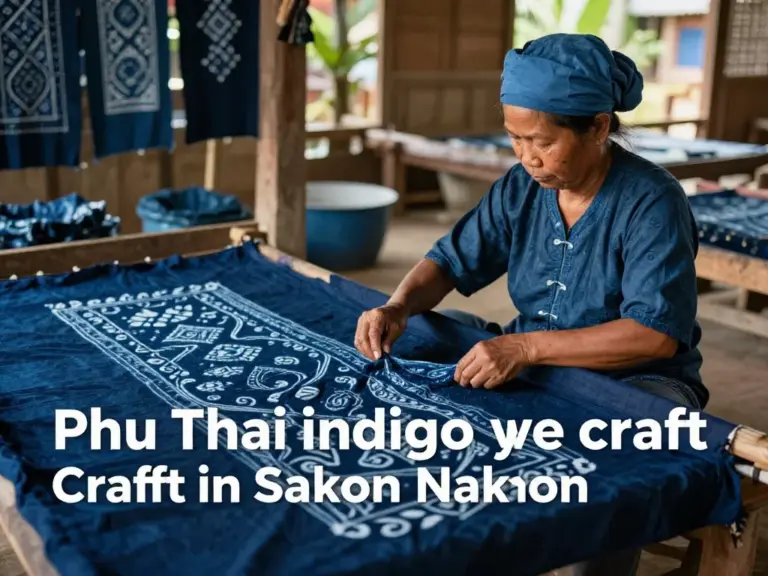
The Phu Thai ethnic group originally migrated from the East bank of the Mekong River, bringing with them a rich heritage of weaving and natural dyeing. For centuries, indigo dyeing was a domestic necessity. Every household in a Phu Thai village would have an indigo vat, and women were expected to master the craft to provide clothing for their families. This historical continuity has allowed the techniques to remain pure, resisting the influx of synthetic chemicals that dominated the global textile industry in the 20th century.
Cultural Significance: A Blue Identity
In the context of Phu Thai indigo dyeing in Sakon Nakhon, the color blue represents a deep connection to nature and the spiritual world. The ‘Kram’ (indigo plant) is treated with immense respect. Artisans often speak of the indigo vat as a living being that needs to be ‘fed’ and ‘tended’ to. The patterns woven into indigo-dyed cloth often tell stories of the community, depicting local flora, fauna, and geometric symbols that serve as protective amulets for the wearer.
Traditional Techniques: The Alchemy of Kram
The process of creating authentic Sakon Nakhon indigo is labor-intensive and requires expert precision. It begins with the cultivation of Indigofera tinctoria. The leaves are harvested and fermented in water to extract the pigment. This ‘mother’ paste is then combined with alkaline ingredients like lime and wood ash water.
- The Fermentation: The indigo vat must be kept at a specific pH level. Artisans use their senses—smell, taste, and sight—to monitor the health of the vat.
- The Dyeing: Cotton or silk yarns are dipped repeatedly into the vat. Oxygenation is key; as the yarn is pulled out, it turns from green to a deep, lustrous blue.
- The Patterning: Techniques like ‘Mudmee’ (Ikat) involve tie-dyeing the yarn before weaving to create intricate designs.
Why Sakon Nakhon Matters for Modern Tourism
For travelers interested in sustainable tourism, Sakon Nakhon offers an authentic look at slow fashion. By supporting Phu Thai weavers, tourists contribute to the preservation of intangible cultural heritage. Visitors can participate in workshops, learning to dip their own fabrics and understanding the chemistry of the earth. This hands-on experience fosters a deeper appreciation for the garments we wear and the hands that make them.
คำถามที่พบบ่อย (FAQ)
What makes Phu Thai indigo different from synthetic dyes?
Phu Thai indigo is 100% natural, using plant-based pigments and organic fermentation. Unlike synthetic dyes, it is eco-friendly, non-toxic to the skin, and possesses natural antibacterial properties.
Where is the best place to see indigo dyeing in Sakon Nakhon?
The Ban Phra Wa community and the various weaving cooperatives in the Phanna Nikhom district are excellent places to witness the traditional Phu Thai techniques firsthand.
Is the indigo color permanent?
Yes, through the traditional fermentation process, the indigo pigment binds deeply with the fibers. While it may ‘bleed’ slightly during the first few washes, the color remains vibrant for decades.
References
- Sustainable Arts and Crafts Institute of Thailand (SACIT)
- Tourism Authority of Thailand: Sakon Nakhon Guide
- UNESCO Intangible Cultural Heritage Perspectives
- Indigo dyeing with Phu Thai artisans in Sakon Nakhon: A hands-on cultural experience and sustainable textile tradition
- Where to go and who to visit: top Phu Thai villages, artisan cooperatives, and ethical tour operators for authentic indigo workshops
- What to expect in a workshop: step-by-step indigo dyeing process, materials, seasonal timing, and how to prepare for a hands-on experience