Join morning alms-giving in Chiang Rai with the local community: Complete guide for first-timers and cultural respect
- Join morning alms-giving in Chiang Rai with the local community: Complete guide for first-timers and cultural respect
- Why Participate in Tak Bat? The Spiritual Significance
- Preparing for Alms Giving: What to Bring and Wear
- Step-by-Step Guide to Respectful Participation
- Cultural Respect: Mistakes to Avoid
- Experiencing Chiang Rai’s Spiritual Heart: A Video Guide
- Where to Find Authentic Alms Sets Near Key Temples
- คำถามที่พบบ่อย (FAQ)
Participating in the daily ritual of offering alms, known locally as Tak Bat, is one of the most profound and authentic cultural experiences you can have in Thailand. If you plan to join morning alms-giving in Chiang Rai, understanding the etiquette ensures you honor the local Buddhist traditions and connect meaningfully with the community.
Chiang Rai, known for its unique Lanna heritage and stunning temples, offers a quieter, more intimate setting for this practice compared to bustling Bangkok or Chiang Mai. This guide provides first-timers with everything needed—from preparation to respectful execution—to make your participation memorable and appropriate.
Why Participate in Tak Bat? The Spiritual Significance
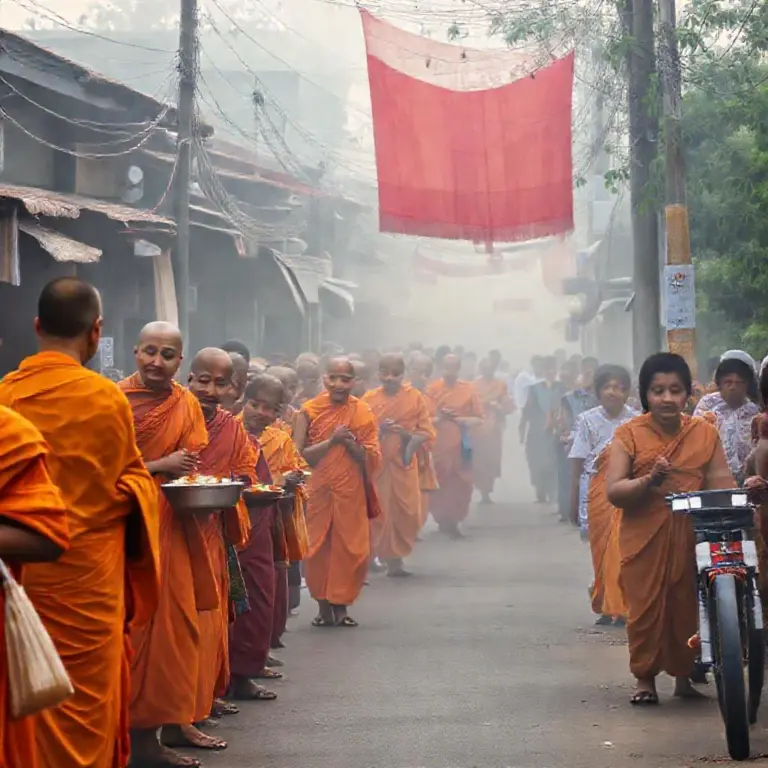
Tak Bat is fundamental to Theravada Buddhism. It is not charity, but an act of mutual dependence and merit-making. Monks rely entirely on the lay community for sustenance, and in return, the community gains spiritual merit by supporting the Sangha (monastic community). When you join morning alms-giving in Chiang Rai, you are actively participating in this ancient, symbiotic relationship.
The Best Time and Place to Observe
Unlike some tourist hubs where alms-giving is staged, Chiang Rai maintains a more authentic morning routine, often starting just after sunrise (around 6:00 AM to 7:30 AM). The best locations are:
- Wat Phra Kaew Area: Near the city center, you’ll find monks walking along smaller, quieter side streets.
- Local Markets: Follow the route where local residents gather early in the morning.
- Hotels/Guesthouses: Many smaller, community-focused accommodations can point you toward the nearest, most respectful route.
Preparing for Alms Giving: What to Bring and Wear
Preparation is key to showing respect. This goes beyond just having the right food; it involves dressing appropriately and understanding the offerings.
Appropriate Attire: Dressing for Respect
The core rule is modesty. Remember, you are approaching sacred figures. Avoid clothing that reveals too much skin.
- Cover Shoulders: Wear shirts with sleeves (t-shirts are fine, but tank tops are not).
- Cover Knees: Long trousers or skirts that reach below the knee are mandatory.
- Footwear: Wear slip-on shoes or sandals, as you will likely be kneeling or standing for the duration of the offering.
The Offering: Food Selection
Traditionally, alms consisted of whatever the monks needed for the day. For tourists, sticky rice (Khao Niao) is the most common and easiest offering. You can buy pre-packaged sets from local vendors near popular alms routes, which is highly recommended for first-timers.
If you prepare your own food, ensure it is:
- Ready-to-Eat: No complex preparation or reheating is necessary.
- Simple: Sticky rice, plain fruit, or small, simple snacks are best. Avoid strong-smelling or overly spicy items.
- Portioned: Food should be easy for a monk to transfer into their alms bowl.
Step-by-Step Guide to Respectful Participation
When the monks approach, follow these steps carefully to ensure you show the utmost respect during this sacred moment. We want to maintain the integrity of the ritual when we join morning alms-giving in Chiang Rai.
The Ritual Sequence
- Wait Quietly: Position yourself respectfully along the route, preferably kneeling or squatting if locals are doing so. Do not block the path.
- Receive the Bowl: When the monk is in front of you, hold your offering (e.g., a small ball of sticky rice) in your right hand, supported by your left. Place the offering directly into the monk’s alms bowl, allowing it to drop gently.
- Do Not Touch: Never touch a monk or their bowl. Maintain a respectful distance.
- Keep Silent: Do not speak to the monks unless they speak to you first (which is rare). Avoid prolonged eye contact.
- Concluding: Once you have given your offering, briefly place your hands together in a Wai gesture (palms together at chest height) and bow slightly.
This entire process takes only seconds per monk. Be mindful of the line forming behind you and move efficiently.
Cultural Respect: Mistakes to Avoid
The biggest pitfall for tourists is treating Tak Bat like a photo opportunity. While photos are permissible, they must never take precedence over the ritual itself. To truly honor the experience when you join morning alms-giving in Chiang Rai, avoid these common errors:
| Avoid Doing | Why It’s Disrespectful |
|---|---|
| Taking photos while actively giving alms. | It suggests the focus is on the camera, not the spiritual act. |
| Handing cash or non-food items. | Monks cannot accept money or items not intended for consumption/use by the monastery. |
| Approaching monks who are walking alone or far from the main procession. | These monks may be observing private vows or routines. |
| Rushing or pushing to get to the front of the line. | Patience and humility are central to Buddhist practice. |
For a deeper, more educational experience, consider booking a guided tour with a reputable local operator who teaches the etiquette beforehand. This ensures better interaction and understanding.
Experiencing Chiang Rai’s Spiritual Heart: A Video Guide
To visualize the serene atmosphere and proper procedure before you go, watching a detailed guide can be invaluable. This video captures the essence of the early morning ritual:
This visual context helps you understand the flow and pace required when you decide to join morning alms-giving in Chiang Rai alongside the devoted local residents.
Where to Find Authentic Alms Sets Near Key Temples
If you are staying near Wat Chedi Luang or another major temple complex, vendors often set up shop an hour before the procession begins. Look for small stalls selling pre-packaged sticky rice wrapped in banana leaves. This supports local vendors and guarantees you have the correct offering.
A Note on Location Specificity
While the general rules apply across Northern Thailand, the atmosphere in Chiang Rai is generally less hurried than in Chiang Mai. Embrace the slower pace. If you wish to see the main procession route near the city center, you might look towards the area surrounding the Clock Tower in the early hours.
For orientation purposes, here is a general map reference for the central city area where many early morning activities occur:
In conclusion, participating in Tak Bat is a privilege. By preparing correctly, dressing modestly, and focusing on respectful silence, you can fully immerse yourself in this beautiful Thai tradition when you join morning alms-giving in Chiang Rai. It offers a genuine glimpse into the heart of Lanna spirituality.
คำถามที่พบบ่อย (FAQ)
Frequently Asked Questions
- Can I take photos of the monks while I am giving alms?
It is best to wait until the procession has passed before taking photos. If you must photograph the act, do so from a distance, without using a flash, and ensure you are not interrupting anyone’s offering. - Is it okay to give food that I bought from a 7-Eleven?
While locals appreciate the gesture, pre-packaged convenience store food is generally discouraged. Opt for traditional sticky rice or fresh fruit, as monks prefer simple, locally prepared items. - Do I need to know Thai phrases?
No, extensive Thai is not required. A simple, respectful ‘Kop Khun Krab/Ka’ (Thank you) after the offering is appreciated, but silence is often preferred during the actual giving. - If I am not participating, where can I watch?
If you only wish to observe, stand well back from the path (at least 5 meters), remain silent, and do not use bright clothing or loud camera equipment. Observe from the sidewalk, not the street.
References
- What to expect at a Chiang Rai morning alms-giving ceremony — schedule, rituals, and local etiquette for visitors
- How to find authentic alms-giving opportunities in Chiang Rai — best neighborhoods, temples, and community events
- Preparing to participate: what to wear, what to bring (offering items), and step-by-step instructions for giving alms respectfully