How canopy walkways work: design, safety, wildlife viewing, and best seasons for gibbon encounters
- How canopy walkways work: design, safety, wildlife viewing, and best seasons for gibbon encounters
For travelers seeking an unparalleled perspective on the Kingdom’s rich biodiversity, nothing rivals the experience of traversing the jungle at treetop level. If you’re planning your next adventure, understanding how the engineering marvels of canopy walkways Thailand work is key to appreciating this unique eco-tourism offering. These suspended bridges offer safe, secure access to the upper canopy, a world previously reserved only for birds and primates. This guide delves into the intricate design, the stringent safety protocols, the incredible wildlife viewing opportunities, and critically, the best seasons to maximize your chances of a thrilling gibbon encounter.
The Engineering Marvel: How Canopy Walkways Work
Canopy walkways are sophisticated structures designed to minimally impact the environment while supporting significant live loads (people). They are not merely ropes and planks; they are highly engineered systems that must withstand tropical weather, high winds, and continuous foot traffic. The fundamental principle revolves around distributing the load across multiple anchor points, typically large, mature trees or concrete pylons, ensuring the stability and longevity of the structure.
Design Principles: Suspension vs. Rigid Structures
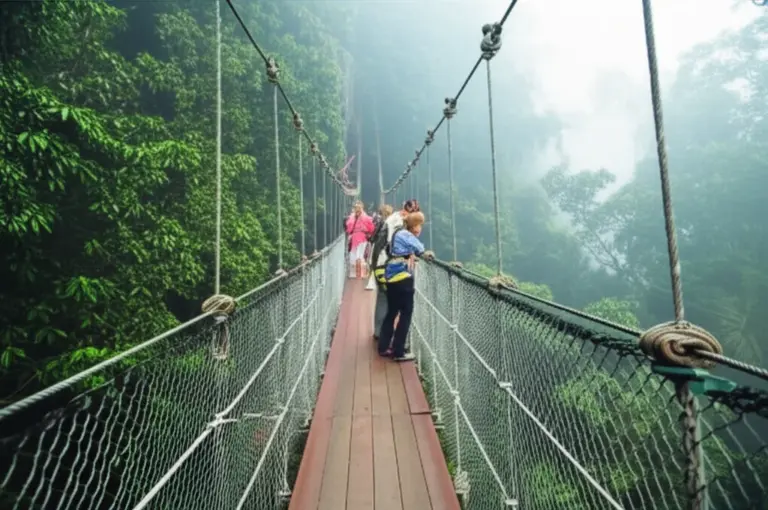
Most canopy walkways Thailand employs fall into one of two categories: suspension bridges or rigid walkways. Suspension systems, like those found in parts of Khao Sok National Park, use cables anchored high on trees, allowing the walkway to sway gently—a feature that enhances the immersive jungle experience. Rigid walkways, such as the famous Doi Tung Tree Top Walk in Chiang Rai, often utilize steel frames supported by pylons or concrete foundations, offering a more stable, less intimidating experience, which is often preferred for accessibility and higher visitor volumes. The choice of design is always dictated by the local topography and the environmental sensitivity of the site.
Key Design Comparison
| Feature | Suspension Design | Rigid Design |
|---|---|---|
| Primary Support | Tensioned cables and mature trees | Steel/concrete pylons or towers |
| Movement | Noticeable sway and bounce | Minimal to no movement |
| Environmental Impact | Lower, relies on tree health | Higher initial foundation impact |
Safety First: Ensuring a Secure Treetop Experience
The commitment to safety on any canopy walkway is paramount, reflecting the E-E-A-T principle. Reputable Thai operators adhere to stringent international safety standards, often surpassing local requirements. The primary safety feature is redundancy: all critical components, from main cables to anchor bolts, are typically rated for several times the maximum expected load. Walkways feature high side netting or railings, and the walking surface is often made of non-slip composite materials or treated wood.
Visitor Protocols and Essential Gear
Before stepping onto a walkway, visitors are given a mandatory safety briefing. While some rigid structures only require closed-toe shoes, more adventurous systems might require a harness and safety lanyard, especially those integrated with ziplining or rappelling components (e.g., certain sections of the ‘Flight of the Gibbon’ experience). Strict rules regarding spacing between visitors and the prohibition of running or intentional swaying are enforced by trained staff, ensuring a controlled and secure environment for everyone.
A New Perspective on Wildlife Viewing
The most profound advantage of a canopy walkway is the access it grants to the forest’s middle and upper strata—the domain of approximately 90% of the rainforest’s life. From this vantage point, you can observe species that are virtually invisible from the forest floor. This includes exotic birds, vibrant butterflies, and the intricate world of epiphytes (air plants) and orchids that thrive on the branches high above. The experience shifts from a ground-level trek to an aerial safari, profoundly enriching your Thailand tourism experience.
One of the most accessible and well-maintained examples of a true canopy walkway is located in Northern Thailand, offering stunning views and a chance to study the region’s diverse flora:
Gibbon Encounters: Best Seasons and Locations
The promise of seeing a gibbon is a major draw for visitors to canopy walkways Thailand. Gibbons, known for their incredible brachiation (arm-swinging) through the trees, inhabit the dense forests of the North and South. While sightings are never guaranteed, certain factors significantly increase your chances.
Understanding Gibbon Habitats
Gibbons require large, undisturbed tracts of primary or mature secondary forest. Key locations in Thailand where you might encounter them include Khao Sok National Park (Surat Thani), which is home to White-handed Gibbons, and certain protected forest areas near Chiang Mai and Chiang Rai. Operators like ‘Flight of the Gibbon’ (a zipline/canopy tour hybrid) are named after the primates they aim to protect and often operate in areas with known populations, utilizing the treetop access to listen for their distinctive morning calls.
The Prime Window: When to Spot Gibbons
The best season for wildlife viewing in Thailand generally aligns with the dry season, from November to February, when the weather is cooler and drier, making the experience more comfortable. However, for gibbons specifically, the best *time of day* is critical. Gibbons are most active and vocal in the early morning, typically between 6:00 AM and 9:00 AM, as they establish their territory with their loud, melodic calls and begin foraging. Booking the earliest possible morning tour is highly recommended for the best chance of a sighting or, at the very least, hearing their captivating song.
The wet season (June to October) can also yield sightings, as the abundance of fruit keeps them closer to food sources, but the weather can be unpredictable. Ultimately, patience and a commitment to silence while on the walkway are your greatest assets.
Experience the Treetop Adventure
To get a sense of the excitement and the safety measures involved in these treetop adventures, watch this clip from a reputable Thai canopy tour:
Conclusion: Elevating Your Thailand Adventure
Whether you are an engineering enthusiast fascinated by the design of these structures or a wildlife lover hoping for a glimpse of the elusive gibbon, canopy walkways Thailand offers a truly unique and sustainable way to experience the rainforest. By understanding the principles of design, respecting the safety protocols, and timing your visit to coincide with the gibbons’ active hours, you can ensure your treetop journey is the highlight of your Thai vacation.
คำถามที่พบบ่อย (FAQ)
Are canopy walkways in Thailand safe?
Yes, reputable canopy walkways in Thailand are extremely safe. They are built and maintained under strict engineering standards, often incorporating redundant safety features, and are regularly inspected. Trained staff provide thorough safety briefings and monitor visitors throughout the experience.
Where is the most famous canopy walkway in Thailand?
The Doi Tung Tree Top Walk in Chiang Rai is one of the most famous and accessible true canopy walkways. However, for a combined experience focusing on wildlife, the ‘Flight of the Gibbon’ courses in locations like Chiang Mai are highly renowned.
What is the best time of day to spot gibbons?
Gibbons are most active and vocal early in the morning, typically between 6:00 AM and 9:00 AM. This is when they perform their territorial calls and begin foraging for food, making it the prime window for sightings.
Are there any age or height restrictions for canopy walks?
Restrictions vary by location and the type of structure. Rigid walkways often have minimal restrictions, while suspension or zipline-integrated courses typically have minimum age, height, and weight requirements for safety reasons. Always check the specific operator’s guidelines before booking.
References
- Doi Tung Development Project Official Website
- Thailand National Parks: Khao Sok Information
- International Union for Conservation of Nature (IUCN) Gibbon Conservation
- The Gibbon Experience and Canopy Walkways: Immersive Treetop Conservation Stays That Support Wildlife and Local Communities
- What is the Gibbon Experience? Origins, conservation goals, and what to expect from treetop immersion stays
- Community-based conservation and sustainable tourism: how stays fund reforestation, anti-poaching, and local livelihoods