Top ethical elephant sanctuaries near Chiang Mai (no riding): profiles, offerings, pricing, and how they prioritize elephant well‑being
- Top ethical elephant sanctuaries near Chiang Mai (no riding): profiles, offerings, pricing, and how they prioritize elephant well‑being
- The Golden Rules of Ethical Elephant Sanctuaries (What to Look For)
- Top Ethical Elephant Sanctuaries Near Chiang Mai (No Riding)
- Planning Your Visit: Essential Tips & Logistics
- The Critical Role of Responsible Tourism
- คำถามที่พบบ่อย (FAQ)
- What is the main difference between an ethical sanctuary and a tourist camp in Chiang Mai?
- How far in advance should I book an ethical elephant sanctuary near Chiang Mai (no riding)?
- Are the prices at ethical sanctuaries significantly higher than regular tourist camps?
- What should I look for regarding the elephants’ diet and environment?
- References
Chiang Mai, the cultural heart of Northern Thailand, is often the first stop for travelers hoping to interact with elephants. However, the line between genuine rescue and exploitative tourism can be blurry. True ethical sanctuaries operate on a ‘hands-off’ or ‘observation-only’ philosophy, prioritizing the elephants’ psychological and physical recovery above tourist entertainment. By choosing organizations that strictly forbid riding, bathing interactions that force unnatural behavior, or cruel training methods, you become part of the solution.
The Golden Rules of Ethical Elephant Sanctuaries (What to Look For)
Before booking, every responsible tourist should evaluate a potential sanctuary against stringent welfare criteria. These benchmarks are what separate a true rescue center from a tourist trap dressed in greenwashing.
Zero Tolerance for Riding or Elephant Shows
The most critical indicator is the complete absence of elephant riding. The process of training an elephant to accept a heavy saddle and human weight often involves ‘phajaan’ (the spirit-breaking process), which is inherently cruel. Furthermore, avoid any location that utilizes bullhooks or encourages performances like painting or soccer. Ethical sanctuaries focus on observation from a respectful distance.
Habitat and Diet: Mimicking Natural Environments
Look for sanctuaries situated in large, natural forest environments where elephants can roam freely, socialize naturally, and forage for food. The diet should be rich in local vegetation, supplemented appropriately by staff. A good sanctuary allows elephants to self-regulate their feeding schedule as much as possible.
Veterinary Care and Rehabilitation Focus
The best centers have dedicated veterinary teams and transparent records of their elephants’ backgrounds, often detailing past abuse or injury. Their primary goal is rehabilitation, not profit generation from the animals’ labor.
Top Ethical Elephant Sanctuaries Near Chiang Mai (No Riding)
These organizations are highly regarded in the responsible tourism community for their commitment to elephant welfare. They are the best examples of **ethical elephant sanctuaries near Chiang Mai (no riding)**.
Sanctuary Profile 1: Elephant Nature Park (ENP)
Founded by the visionary Sangduen Chailert (Lek), ENP is the gold standard. It is a rescue and rehabilitation center that hosts over 100 elephants saved from logging, riding camps, and street begging. They offer various visitation programs, all strictly observational.
Offerings & Experience
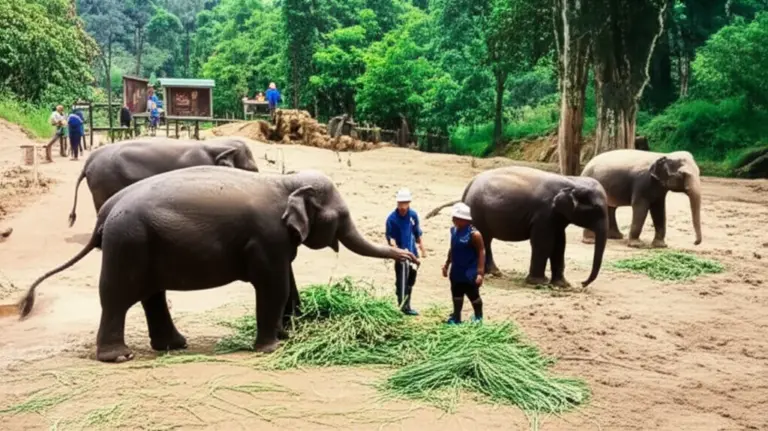
Visitors participate in feeding, walking alongside the elephants in their natural environment, and observing them bathe from a distance or from safe viewing platforms. Full-day visits are standard, providing deep insight into the elephants’ routines.
Pricing Snapshot (Approximate)
| Program | Duration | Approx. Cost (THB) |
|---|---|---|
| Full Day Visit | Full Day | ~3,000 |
| Half Day Visit | Morning/Afternoon | ~2,500 |
Sanctuary Profile 2: Into the Wild Elephant Camp
Located slightly further from the city bustle, Into the Wild emphasizes an immersive, educational experience. They focus heavily on allowing the elephants to roam in their own time, often involving quiet observation in the forest.
Offerings & Experience
The experience centers around preparing food, walking with the herd to a natural river or mud pit for observation (from the banks), and learning about individual elephant histories. Group sizes are kept intentionally small to minimize stress on the animals.
Pricing Snapshot (Approximate)
| Program | Duration | Approx. Cost (THB) |
|---|---|---|
| Full Day Experience | Full Day | ~2,800 |
Sanctuary Profile 3: Chai Lai Orchid (Karen Community Focus)
While perhaps smaller than ENP, Chai Lai Orchid is deeply integrated with the local Karen community and focuses on sustainable eco-tourism alongside elephant rescue. They offer a unique blend of cultural immersion and ethical animal interaction.
Offerings & Experience
Visits usually involve feeding and observing the resident elephants, often followed by lunch prepared with locally sourced ingredients. Their commitment to fair wages for the local mahouts is a significant ethical component.
Pricing Snapshot (Approximate)
| Program | Duration | Approx. Cost (THB) |
|---|---|---|
| Elephant Day Visit | Day Trip | ~2,500 |
Planning Your Visit: Essential Tips & Logistics
Securing your spot at these highly sought-after locations requires planning. Since these centers limit visitor numbers to ensure elephant comfort, booking well ahead is non-negotiable.
Booking in Advance
For Elephant Nature Park, booking six months to a year in advance is often recommended, especially for peak season travel. Other smaller venues may require only 1-2 months notice, but always check their official websites.
What to Pack
- Lightweight, quick-drying clothing (you might get muddy!)
- Reef-safe sunscreen and strong insect repellent
- Closed-toe shoes or sturdy sandals (no flip-flops)
- Reusable water bottle (many sanctuaries provide filtered water stations)
The Critical Role of Responsible Tourism
Your travel dollars have immense power. By actively seeking out and supporting places that demonstrate genuine commitment to **ethical elephant sanctuaries near Chiang Mai (no riding)**, you create an economic incentive for other businesses to shift away from harmful practices. This shift is vital for the long-term survival and rehabilitation of elephants in Thailand.
To further understand the day-to-day life and rehabilitation successes at these centers, take a moment to view this visual documentation of ethical elephant interaction:
Witnessing elephants living naturally, free from the burden of human demands, is an infinitely more rewarding and meaningful travel experience than any forced interaction could ever be. Remember, look for welfare first, selfies second.
คำถามที่พบบ่อย (FAQ)
References
For further research on animal welfare standards in Thailand:
- Visit Ethical Elephant Sanctuaries in Chiang Mai (No Riding): Responsible Wildlife Experiences and How to Choose the Best One
- Why choose no-riding elephant sanctuaries in Chiang Mai? Understanding ethical tourism, welfare standards, and what “no riding” truly means
- How to plan your visit: booking tips, best times to go, what to expect during a no‑riding sanctuary day, and packing checklist