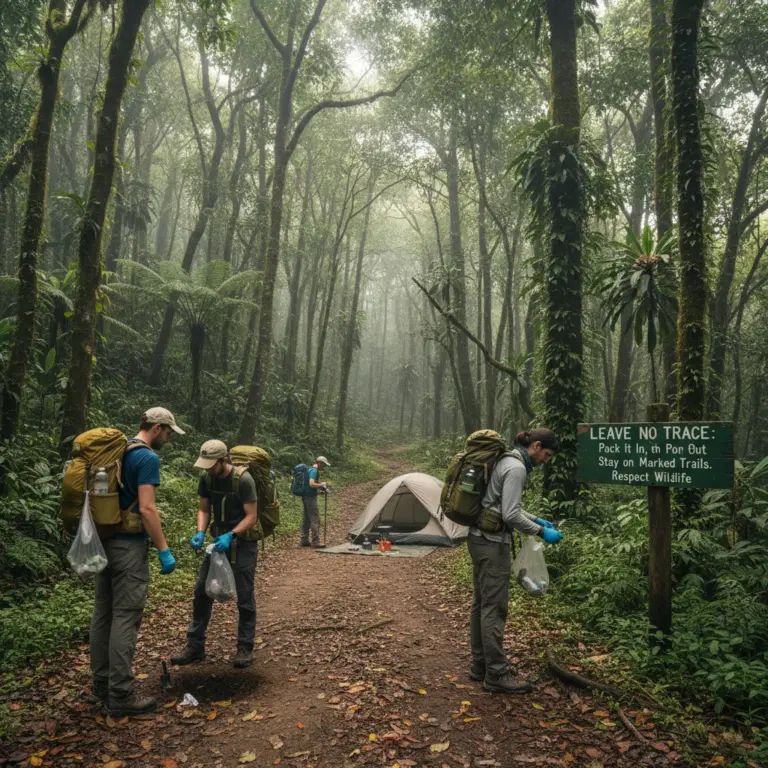
Nakhon Si Thammarat Headwater National Parks: Complete Leave No Trace Guide for Responsible Trekking and Camping
- Nakhon Si Thammarat Headwater National Parks: Complete Leave No Trace Guide for Responsible Trekking and Camping
- Understanding the Headwater Ecosystems of Nakhon Si Thammarat
- The Seven Principles of Leave No Trace in Practice
- Applying LNT to Specific Activities in Nakhon Si Thammarat
- Navigating to Key Trailheads (Example Location)
- คำถามที่พบบ่อย (FAQ)
- Is open burning allowed for cooking in Nakhon Si Thammarat National Parks?
- How far should I camp from a water source in the headwaters?
- What is the best way to handle toilet paper in the humid jungle environment?
- Are there specific trails in Nakhon Si Thammarat that require special LNT consideration?
- References
Welcome to the emerald heart of Southern Thailand! Nakhon Si Thammarat province is home to some of the most biodiverse and ecologically sensitive headwater ecosystems in the country, notably within Khao Luang National Park. As Thailand tourism continues to flourish, preserving these vital natural resources is paramount. This comprehensive guide provides the essential **Nakhon Si Thammarat Headwater National Parks: Complete Leave No Trace Guide for Responsible Trekking and Camping** to ensure your adventure leaves nothing but footprints and takes nothing but memories. Following Leave No Trace (LNT) principles is not just recommended; it is the ethical standard for exploring these pristine environments.
Understanding the Headwater Ecosystems of Nakhon Si Thammarat
The headwaters originating in the mountain ranges of Nakhon Si Thammarat, particularly around Khao Luang National Park, are critical water sources for countless communities downstream. These areas are characterized by high humidity, dense primary rainforests, and fragile soil structures. Disturbing vegetation or polluting water sources here has immediate and long-lasting consequences. Our expertise in sustainable travel dictates that we treat these zones with the utmost respect.
The Importance of Khao Luang National Park
Khao Luang is the crown jewel, featuring stunning waterfalls, deep caves, and endemic flora and fauna. Its elevation creates microclimates crucial for regional weather patterns. Understanding the specific challenges here—like slippery trails and sensitive cave environments—is key to applying LNT effectively.
The Seven Principles of Leave No Trace in Practice
The LNT framework is globally recognized for minimizing human impact. Here is how to apply these seven core principles specifically to the rainforest trekking and camping environment of the Nakhon Si Thammarat headwaters.
1. Plan Ahead and Prepare
Preparation prevents pollution and panic. For headwater trekking, this means understanding local weather (monsoon season dramatically increases flash flood risk) and packing appropriately.
- Permits & Regulations: Secure all necessary permits for camping or specific trail access well in advance.
- Gear Check: Ensure all gear, especially water purification systems, is functional. Bring waterproof bags for all electronics and sleeping gear.
- Food Strategy: Plan meals that require minimal packaging. Pack out *all* food waste.
2. Travel and Camp on Durable Surfaces
In wet, sensitive rainforest areas, durable surfaces are often limited to established campsites or rock slabs. Avoid creating new trails or cutting switchbacks. Stay on marked paths to protect delicate undergrowth.
3. Dispose of Waste Properly (Pack It In, Pack It Out)
This is perhaps the most critical principle near water sources. All trash—including organic matter like fruit peels (which attract wildlife and take years to decompose in humid climates)—must be carried out.
- Human Waste: Dig catholes 6 to 8 inches deep, at least 200 feet (about 70 adult paces) from water, camp, and trails. Cover thoroughly.
- Toilet Paper: Pack it out. Do not burn or bury it, as decomposition is very slow in the high-humidity environment.
- Wastewater: Strain dishwater and scatter the strained water widely, again, 200 feet from water sources. Never wash dishes directly in streams or pools.
Video Guide: Essential Gear for Thai Jungle Trekking
To visualize best practices for packing and preparing for these environments, watch this essential guide on jungle trekking gear:
4. Leave What You Find
Resist the urge to collect flora, fauna, rocks, or historical artifacts. In these protected parks, removing natural items is illegal and disrupts the ecosystem. This also applies to carving initials into trees or rocks. Enjoy the scenery visually.
5. Minimize Campfire Impacts
Due to high moisture content and the risk of wildfire spreading rapidly through dense undergrowth, campfires are strongly discouraged, and often banned, in Nakhon Si Thammarat headwater parks. Use a lightweight, reliable stove for cooking. If fires are explicitly permitted (check local rules!), use established fire rings and ensure the fire is dead out (cool to the touch) before leaving.
6. Respect Wildlife
Nakhon Si Thammarat is home to diverse wildlife, including primates and various bird species. Never feed wild animals. Feeding habituates them to humans, which can lead to aggressive behavior and dependency. Store food securely, preferably hung from a tree or in bear-proof containers, far from your sleeping area.
7. Be Considerate of Other Visitors
Share the trails and the serenity. Keep noise levels low, especially near campsites and popular viewpoints. Yield to uphill traffic, and always greet fellow trekkers with a friendly nod or quiet word. This enhances the experience for everyone seeking immersion in nature.
Applying LNT to Specific Activities in Nakhon Si Thammarat
Responsible tourism extends beyond basic camping. Here’s how to integrate LNT into common activities around the region’s natural attractions.
Trekking and Trail Etiquette
| Action | LNT Guideline |
|---|---|
| Crossing Streams | Use existing crossings or step only on stable rocks. Avoid trampling riparian vegetation. |
| Taking Photos | Do not move logs, rocks, or branches to frame a perfect shot. Use existing compositions. |
| Trail Markings | Never remove, alter, or add trail markers or cairns. Rely on your map and compass/GPS. |
Caving Regulations (If Applicable to Local Parks)
Caves are extremely fragile environments, often hosting unique, slow-growing life forms like cave fauna and speleothems. If guided tours are available, always use them. Never touch formations, as oils from your skin can halt their growth forever. Wear appropriate footwear to avoid slips and damaging the cave floor.
While specific trailheads vary, proper navigation ensures you stay on durable surfaces and adhere to park boundaries. For general orientation towards the Khao Luang area:
คำถามที่พบบ่อย (FAQ)
Find quick answers regarding ethical travel in the region.
References
For further reading on park regulations and responsible travel in Thailand:
- Department of National Parks, Wildlife and Plant Conservation (DNP) Official Site
- Leave No Trace Center for Outdoor Ethics
By internalizing the principles of this Nakhon Si Thammarat Headwater National Parks: Complete Leave No Trace Guide for Responsible Trekking and Camping, you become a steward of these magnificent Thai treasures. Enjoy your journey responsibly!
- Planning Your Trip: Best Seasons, Access Points, Permits, and Local Regulations for Nakhon Si Thammarat headwaters
- On-Trail Practices: How to Hike Sustainably — Trail Etiquette, Waste Management, and Minimizing Campfire Impact
- Low-Impact Camping Techniques: Leave No Trace Gear, Campsite Selection, and Safe Food Storage in Tropical Forests