Why Visit Bangkok’s Grand Palace and Wat Pho? A Quick Overview of Their History and Cultural Significance
If you are planning a trip to Thailand, you have likely seen images of shimmering gold spires and intricate mosaics piercing the skyline. Among the myriad of temples and historical sites, two stand out as absolute must-see landmarks: the Grand Palace and Wat Pho. Understanding Why Visit Bangkok’s Grand Palace and Wat Pho is essential for any traveler seeking to grasp the heart of Thai identity. These sites are not merely tourist attractions; they are the spiritual and historical anchors of the nation.
The Grand Palace: A Symbol of Royal Power
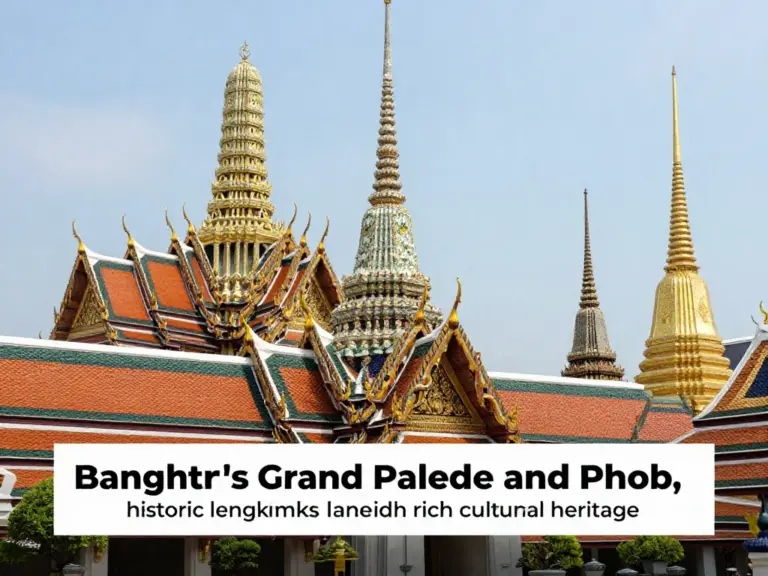
The Grand Palace has been the official residence of the Kings of Siam since 1782. When King Rama I ascended the throne and moved the capital to Bangkok, he constructed this sprawling complex to mirror the grandeur of the former capital, Ayutthaya. Visiting the Grand Palace is a lesson in Thai architectural evolution. The complex is a walled-in city, home to the most sacred Buddhist temple in all of Thailand: Wat Phra Kaew, or the Temple of the Emerald Buddha. The statue itself, carved from a single block of jade, is the palladium of the Thai Kingdom and is dressed in seasonal robes changed by the King himself.
Wat Pho: The Birthplace of Traditional Thai Massage
Just a short walk from the Grand Palace lies Wat Pho, officially known as Wat Phra Chetuphon Wimon Mangkhalaram. While the Grand Palace represents the power of the monarchy, Wat Pho represents the spiritual and intellectual heart of the people. It is famous globally for housing the massive Reclining Buddha, a 46-meter-long golden statue that depicts the Buddha’s passage into Nirvana. Beyond the statue, Wat Pho is historically significant as the birthplace of traditional Thai massage. For centuries, it served as a center for public education, with stone inscriptions covering the grounds that acted as an encyclopedia of medicine, history, and science.
Cultural Significance and Architectural Marvels
The reason Why Visit Bangkok’s Grand Palace and Wat Pho goes beyond just sightseeing; it is about witnessing the artistic synthesis of Thai culture. The architecture found here—characterized by chedi (stupas), intricate gold leaf detailing, and colorful porcelain mosaics—is unique to the Rattanakosin era. These sites illustrate how Thailand has preserved its traditions while adapting to global influences. Walking through the courtyards, you are surrounded by mythology, with statues of mythical creatures like the Garuda and Yakshas (temple giants) standing guard, reminding visitors of the deep Buddhist and Hindu roots that shape Thai society.
| Feature | Grand Palace | Wat Pho |
|---|---|---|
| Main Attraction | Emerald Buddha | Reclining Buddha |
| Historical Role | Royal Residence | Center of Education/Medicine |
| Atmosphere | Regal & Formal | Spiritual & Relaxing |
Planning Your Visit
To maximize your experience, it is highly recommended to visit early in the morning to avoid the intense tropical heat and the largest crowds. Both sites are located in the historic Phra Nakhon district, making them easily accessible in a single day. You can start with the Grand Palace, as it closes earlier in the afternoon, and then stroll over to Wat Pho for a more relaxed exploration. If you find yourself needing a break, Wat Pho is the perfect place to receive an authentic Thai massage from students of the Wat Pho Thai Traditional Massage School.
คำถามที่พบบ่อย (FAQ)
1. Is there a dress code for visiting the Grand Palace and Wat Pho?
Yes, both locations are sacred. You must wear clothing that covers your shoulders and knees. Avoid sleeveless shirts, short skirts, or shorts.
2. Can I visit both the Grand Palace and Wat Pho in one day?
Absolutely. They are located within walking distance of each other in the Old City of Bangkok, making it easy to visit both in a single morning or afternoon.
3. Why is Wat Pho considered the birthplace of Thai massage?
Wat Pho served as a center for public education in the 18th century, where traditional medicine and massage techniques were codified, taught, and preserved on stone inscriptions found throughout the temple.