What to expect at a Chiang Rai morning alms-giving ceremony — schedule, rituals, and local etiquette for visitors
- What to expect at a Chiang Rai morning alms-giving ceremony — schedule, rituals, and local etiquette for visitors
- Understanding Tak Bat: The Ritual of Merit-Making
- The Chiang Rai Morning Alms-Giving Ceremony Schedule and Location
- Essential Etiquette: How to Participate Respectfully
- The Aftermath: What Happens Next?
- คำถามที่พบบ่อย (FAQ)
- Can tourists take photos during the alms giving?
- Is it okay to offer money instead of food?
- Do I have to kneel down to give alms?
The spiritual heart of Northern Thailand beats strongly in Chiang Rai, where ancient traditions remain a vibrant part of daily life. Among the most moving and authentic experiences available to visitors is participating in the Chiang Rai morning alms-giving ceremony, known locally as Tak Bat. This daily ritual is not a tourist show; it is a profound act of merit-making (tham bun) where the local Buddhist community offers food to the resident monks. Understanding the schedule, the sacred rituals involved, and, most importantly, the local etiquette is key to participating respectfully and gaining a meaningful insight into Lanna culture.
This guide will prepare you to engage respectfully with this beautiful tradition, ensuring your experience honors the monks and the community.
Understanding Tak Bat: The Ritual of Merit-Making
Tak Bat translates simply to ‘offering alms.’ It is the foundational practice where the Sangha (monastic community) relies entirely on the laypeople for sustenance. In return, the laypeople gain spiritual merit, supporting the monks who dedicate their lives to study and practice.
The Significance of the Morning Offering
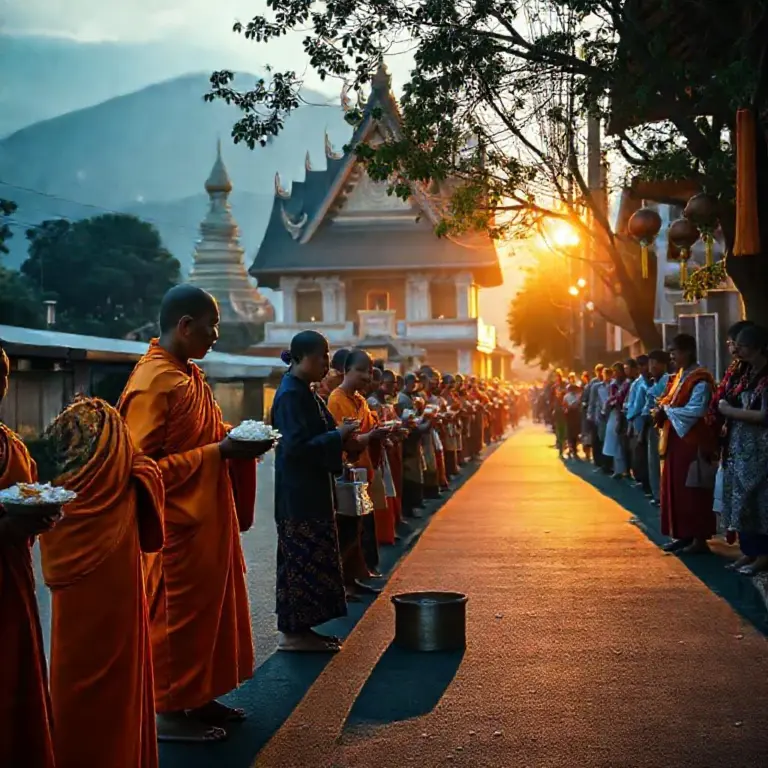
The ceremony typically begins just before sunrise. Monks leave their temples in single file, carrying their designated alms bowls. The silence and solemnity of the procession are striking. When receiving offerings, the monks do not speak; the offering itself is the act of exchange—physical sustenance for spiritual blessing.
What Monks Receive
The offerings are almost always food—sticky rice being the staple, often supplemented by fruit, curries, or snacks. The food should be simple, ready-to-eat, and preferably cooked that morning. It is crucial to remember that you are providing sustenance, not charity. The quality and presentation reflect respect for the recipient.
The Chiang Rai Morning Alms-Giving Ceremony Schedule and Location
While many temples in Chiang Rai conduct their own small ceremonies, the most famous and accessible location for visitors wishing to observe or participate in the Chiang Rai morning alms-giving ceremony is usually around Wat Phra Singh or along the main streets leading out from major temples early in the morning.
Timing is Everything
The ceremony is dictated by the sun, not the clock. Monks must collect their food before noon. Therefore, participants must be ready well before dawn:
- Preparation Time (5:30 AM – 6:00 AM): Purchase your offerings and find your designated spot along the route.
- Procession Begins (Approx. 6:15 AM): The monks begin their silent walk, usually lasting about 30 to 45 minutes.
- Completion: Once the monks return to the temple, the ceremony is over.
Where to Observe in Chiang Rai
While specific routes change daily, the area surrounding the central city gates and major temples like Wat Phra Singh are reliable spots. Some local hotels or tour operators can provide precise, up-to-date locations for that specific day.
Essential Etiquette: How to Participate Respectfully
Respect is the cornerstone of this tradition. Failure to observe proper etiquette can be seen as deeply disrespectful to the monks and the local culture. Follow these guidelines carefully when engaging in the Chiang Rai morning alms-giving ceremony.
Dress Code and Demeanor
- Cover Up: Shoulders and knees must be completely covered for both men and women. Lightweight trousers or long skirts and shirts with sleeves are mandatory.
- Silence is Golden: Do not speak to the monks, smile broadly, or try to initiate conversation. Maintain a quiet, humble demeanor.
- No Flash Photography: Ask permission before taking any photos, and never use flash. If you must photograph, do so discreetly from a distance after the offering is made.
The Act of Giving
When the monk approaches, kneel down (if you are physically able). This shows reverence. The offering should be placed directly into the alms bowl. Do not hand the food to the monk directly; this is considered improper contact.
| Action | Correct Protocol | Incorrect Protocol |
|---|---|---|
| Position | Kneel or crouch below the monk’s shoulder level. | Stand tall or hover over the monk. |
| Offering | Place the food gently into the alms bowl. | Hand the food directly to the monk. |
| Post-Offering | Lower your head in a slight wai (Thai greeting). | Rush to the next monk or immediately start talking. |
Preparing Your Offerings
Most visitors buy pre-packaged sets from vendors near the ceremony site. These usually contain sticky rice wrapped in banana leaves. If you prepare your own:
- Ensure the food is already cooked and portioned.
- Avoid highly spicy, strong-smelling, or raw foods.
For deeper context on the spiritual significance of these daily rituals across Thailand, this short video offers excellent insight:
The Aftermath: What Happens Next?
Once the monks have completed their collection, they return to the temple grounds. They will then sort the offerings. Some food is consumed for the day’s main meal, while other items might be shared with novices or redistributed. The layperson’s role is complete after the offering is made; do not follow the monks back to the temple.
Participating in the Chiang Rai morning alms-giving ceremony is a privilege. By respecting the schedule and adhering strictly to local etiquette, you ensure this sacred tradition continues to thrive, offering both sustenance to the Sangha and profound cultural enrichment to your travels in Thailand.
คำถามที่พบบ่อย (FAQ)
Here are answers to common questions visitors have about participating in the morning alms ritual.
References
For further reading on Thai Buddhist customs:
- Join morning alms-giving in Chiang Rai with the local community: Complete guide for first-timers and cultural respect
- How to find authentic alms-giving opportunities in Chiang Rai — best neighborhoods, temples, and community events
- Preparing to participate: what to wear, what to bring (offering items), and step-by-step instructions for giving alms respectfully