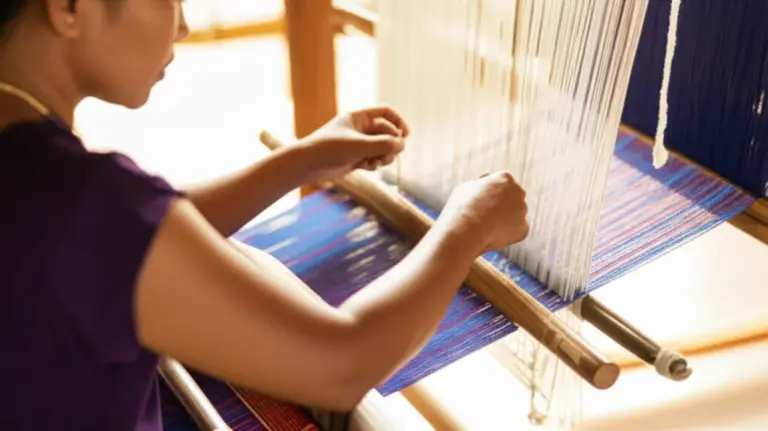
Introduction to Thai Silk Weaving: History, Cultural Significance, and Regional Styles
- Introduction to Thai Silk Weaving: History, Cultural Significance, and Regional Styles
Welcome to the vibrant world of Thai silk, a textile tradition as rich and colorful as the Kingdom of Thailand itself. For tourists and travelers seeking a deeper connection with Thai culture, understanding the craft is essential. This comprehensive Introduction to Thai Silk Weaving: History, Cultural Significance, and Regional Styles serves as your guide to appreciating this exquisite art form, from the delicate silkworm cocoon to the finished masterpiece that graces royal ceremonies and international runways. Thai silk is not merely a fabric; it is a storied cultural artifact, a symbol of national heritage, and a testament to the skill and patience of generations of weavers.
The Enduring History of Thai Silk
The origins of sericulture (silk farming) in Thailand stretch back millennia, with archaeological evidence suggesting the practice existed in the northeast region as far back as 3,000 years ago. Initially a domestic craft used for local clothing, its quality and distinctiveness gradually elevated its status.
Ancient Roots and Royal Patronage
For centuries, silk production flourished, primarily in the northeastern (Isaan) provinces, but it remained largely an artisanal, village-level industry. It was deeply woven into the fabric of rural life, with women traditionally responsible for every step, from raising the silkworms to the final weaving. The finest silks were often reserved for the Royal Court, symbolizing status and prestige. Her Majesty Queen Sirikit has played a pivotal role in the modern era, establishing foundations to support and promote silk weaving, ensuring the traditions survive and adapt to contemporary demands.
The Jim Thompson Legacy
The global recognition of Thai silk is inextricably linked to the American entrepreneur, Jim Thompson. After settling in Thailand following World War II, Thompson was captivated by the exquisite but declining craft. In the 1950s, he revitalized the industry by introducing new dyeing techniques, improving quality control, and, most importantly, marketing the fabric to international fashion houses and designers. His efforts transformed Thai silk from a cottage industry into a world-renowned luxury export, creating economic opportunities for thousands of weavers. The story of Jim Thompson, particularly his mysterious disappearance, only added to the mystique surrounding the fabric. The Jim Thompson House in Bangkok remains a must-visit cultural landmark.
Cultural Significance: More Than Just Fabric
Thai silk’s cultural value transcends its material worth. It embodies the nation’s identity, history, and artistic spirit. Each thread, color, and pattern tells a story of the community, the weaver’s life, and the natural world.
Silk in Thai Ceremonies and Dress
Silk is the fabric of choice for all major life events in Thailand. It is used for traditional wedding attire, worn during religious ceremonies, and forms the basis of the *Chut Thai* (Thai national dress). The colors often carry symbolic meaning, such as gold for royalty, or specific colors worn on certain days of the week in accordance with Thai tradition.
Economic Impact and Community Pride
For many rural villages, particularly in the northeast, silk weaving is the primary source of income. This decentralized production model ensures that the economic benefits remain within the local communities, fostering a strong sense of pride and self-sufficiency. The continuity of this craft is a crucial element of Thailand’s intangible cultural heritage.
Exploring the Regional Styles of Thai Silk Weaving
The art of silk weaving varies significantly across Thailand, with each region developing its own distinct techniques, color palettes, and motifs. Understanding these regional differences is key to a true Introduction to Thai Silk Weaving: History, Cultural Significance, and Regional Styles.
Northeastern Thailand (Isaan): The Heart of Silk
The Isaan region, including provinces like Nakhon Ratchasima (Korat), Khon Kaen, and Surin, is the epicenter of Thai silk production. Its most famous technique is *Mudmee* (Ikat), where the warp and/or weft threads are tie-dyed before weaving to create complex, blurred patterns. Traditional Mudmee designs often feature geometric shapes, local flora, or mythical creatures. The result is a uniquely textured and visually dynamic fabric.
Northern Thailand: Unique Patterns and Techniques
The northern provinces, such as Chiang Mai and Lamphun, are known for their use of finer threads and intricate supplementary weft techniques, often influenced by the neighboring Lanna Kingdom traditions. Lamphun, in particular, is famed for its delicate, high-quality *Yok Thong* (brocade silk), which incorporates gold or silver threads for a luxurious finish.
Central and Southern Styles: Simplicity and Color
Silk from the Central Plains, especially near Bangkok, often features more solid colors and simpler weaves, catering to modern fashion and upholstery. The focus here is on the silk’s natural luster and quality. While less known for weaving, the South utilizes vibrant, bold colors, sometimes incorporating techniques from the Malay peninsula.
The Craft of Thai Silk Weaving: A Detailed Look
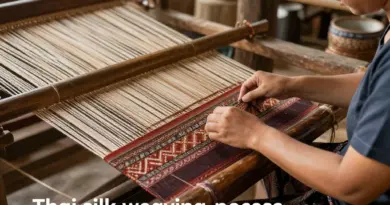
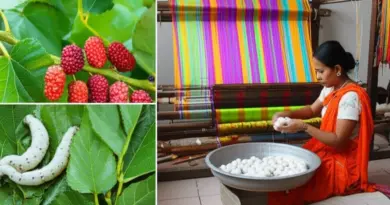
The process of creating hand-woven Thai silk is a labor of love, taking hundreds of hours from cocoon to cloth. It begins with the *Bombyx mori* silkworm, which feeds exclusively on mulberry leaves. The silk threads are reeled by hand, a crucial step that gives Thai silk its characteristic slightly uneven, unique texture and natural sheen, distinguishing it from machine-made varieties.
| Step | Description | Time Required |
|---|---|---|
| Sericulture (Silkworm Rearing) | Raising silkworms on mulberry leaves until they spin cocoons. | Approx. 30 Days |
| Reeling and Spinning | Extracting the delicate silk filament from the cocoons. | Varies (High Skill) |
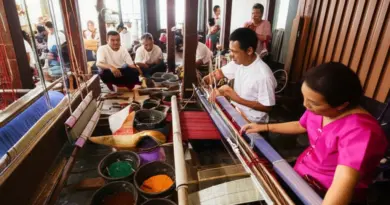
| Dyeing (Natural/Chemical) | Coloring the yarn, often using natural dyes like indigo or bark. | 1-3 Days |
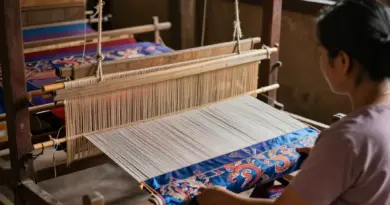
| Weaving (Hand Loom) | Interlacing the warp and weft threads to create the fabric. | Weeks to Months (for complex patterns) |
See the Mudmee Weaving Process in Isaan
To truly appreciate the complexity of the regional styles, especially the famous Mudmee technique, watch the dedication of the weavers in rural Northeastern Thailand:
How to Identify and Purchase Authentic Thai Silk
As a tourist, it’s vital to distinguish genuine hand-woven Thai silk from mass-produced or synthetic imitations. Authentic Thai silk has a number of characteristics:
- The Sheen Test: Hand-woven Thai silk has a unique, two-toned sheen, often appearing to change color slightly when viewed from different angles. This is due to the hand-reeled, slightly irregular threads.
- The Feel and Texture: It feels slightly rough or ‘nubby’ to the touch due to the natural irregularities of the hand-spun threads, unlike the perfectly smooth surface of machine-made silk.
- The Crease Test: Genuine silk, when tightly squeezed in the hand, will crease significantly.
- The Burn Test (For Experts): A small thread of real silk burns slowly, smells like burnt hair, and leaves a brittle black ash. Synthetic silk melts and smells like burnt plastic.
The best places to buy include the Jim Thompson flagship stores, the Queen Sirikit Department of Sericulture shops, or directly from weaving villages in Isaan and Chiang Mai for the most authentic experience and best prices.
คำถามที่พบบ่อย (FAQ)
Q: What makes Thai silk unique compared to silk from other countries?
A: Thai silk is primarily unique due to two factors: the hand-reeled process and the use of the Isaan Mudmee (Ikat) dyeing technique. The hand-reeling leaves tiny irregularities in the thread, giving the silk its distinct slubbed texture and famous natural luster (the two-toned sheen). Most other silks are machine-reeled, resulting in a perfectly smooth finish.
Q: Where is the best place for tourists to see the silk weaving process?
A: The best place is often the source: the weaving villages in the Northeastern provinces (Isaan), such as those near Khon Kaen or Surin. For tourists in Bangkok, the Jim Thompson House Museum offers a historical context and often hosts demonstrations. In Northern Thailand, a visit to a village outside Chiang Mai or the silk center in Lamphun provides a good overview of the Northern styles.
Q: What is Mudmee silk?
A: Mudmee (or Ikat) is a traditional resist-dyeing technique where the threads (either the warp, weft, or both) are carefully tied and dyed before they are placed on the loom. This process creates the complex, often geometric or pictorial, patterns that appear ‘blurred’ at the edges. It is the most iconic and culturally significant style of Thai silk, predominantly found in the Isaan region.
Q: Is Thai silk durable?
A: Yes, high-quality, hand-woven Thai silk is exceptionally durable. The silk thread from the *Bombyx mori* cocoon is naturally strong, and the traditional weaving process results in a dense, resilient fabric. With proper care (usually dry cleaning), Thai silk can last for generations.
Q: Is Thai silk always made from yellow cocoons?
A: Most traditional Thai silk is produced from the cocoons of the Thai native silkworm, which spins a distinctive yellow cocoon. However, some weavers also use the white cocoons of the imported *Bombyx mori* variety, particularly for easier dyeing into lighter colors. The yellow cocoon silk is highly prized for its naturally rich golden hue.
References
- The Jim Thompson Official Website: History and Heritage
- Queen Sirikit Department of Sericulture: Thai Silk Information
- UNESCO: Intangible Cultural Heritage and Thai Textiles
- Traditional Thai Arts and Crafts: A Guide to Silk Weaving for Cultural Preservation and Tourism Development
- Materials and Techniques: Mulberry Cultivation, Silk Thread Production, and Traditional Weaving Methods
- Designs, Motifs, and Symbolism: Meaning Behind Patterns, Color Usage, and Regional Variations